On January 27, 1945, Auschwitz was finally liberated. In The Women’s Orchestra of Auschwitz, New York Times bestselling author Anne Sebba drew on meticulous archival research and exclusive first-hand accounts to tell the full and astonishing story of how a disparate band of young girls struggled to overcome differences and little musical knowledge to form an orchestra in order to survive the horrors of Auschwitz.
Below, Anne Sebba shared with The History Reader her list of the most important Holocaust books which helped her research The Women’s Orchestra of Auschwitz.
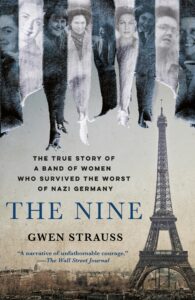
The Nine by Gwen Strauss
A gripping true story about women, Strauss tells how nine resistance women escaped from a nazi camp and survived thanks to courage, resilience, and sisterhood.
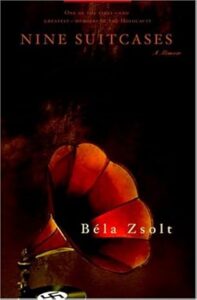
One of the first holocaust memoirs ever written but translated into English only in 2004. It is a harrowing memoir by the Hungarian writer of his survival in the Ghetto and then as a forced labourer in Ukraine finally how he escaped Auschwitz by means of a deal that saved a thousand or so Hungarians at the end of the war.
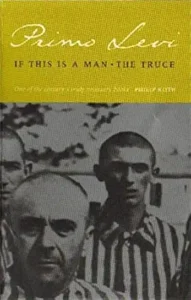
Primo Levi, a Jewish-Italian chemist and survivor of Auschwitz, wrote a number of books about his wartime trauma but this is his most famous. His deep philosophical understanding of the difficulty faced by survivors is a must for any one who wants to understand the Holocaust and its aftermath.
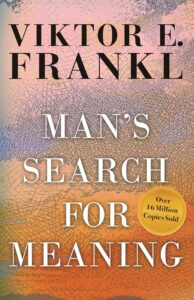
I keep this important book by my desk as no one else who experienced the Nazi death camps has been able to explain so well how it was still possible to find meaning in life in the post-war world.
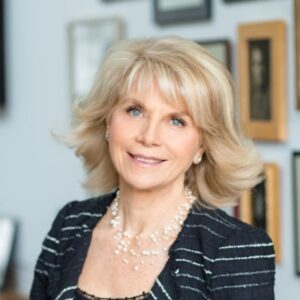
ANNE SEBBA is a prize-winning biographer, lecturer, and former Reuters foreign correspondent who has written several books, including That Woman and Les Parisiennes. A former chair of Britain’s Society of Authors and now on the Council, Anne is also a Senior Research Fellow at the Institute of Historical Research. She lives in London.