
On June 1, 1909, thousands of people gathered in Manhattan to watch the kickoff of The International Automobile Endurance Contest, also known as the first Ocean-to-Ocean Race, as a handful of brave drivers sought to become the first person to successfully cross the United States in an automobile. The Hardest, Longest Race by Pulitzer prize-winning journalist Eric Moskowitz brings this colorful time in America’s history to life as he shows the impact the automobile would soon have on both the populace and the American landscape at the turn of the 20th century. Start reading an introductory excerpt below, or check out the audio excerpt at the bottom of the page for this thrilling new read.
1
The Starting Gun
New York City, June 1, 1909
Lined up before New York’s City Hall, the automobiles in the Ocean-to-Ocean Race trembled and snorted, vibrating in neutral, belching exhaust. Parted by police, thousands of people craned for a better view from both sides of the plaza, and hundreds more looked down from the skyscrapers lining Park Row. Mayor George B. McClellan Jr., the dashing son of the Civil War general, fingered a gleaming revolver plated with Yukon gold, raising it overhead. The hands on the cupola clock above City Hall nudged past 3 pm on Tuesday, June 1, 1909.
The automobiles strained; the crews in their dusters and driving caps shifted in their seats. They were racehorses at the gate, ready to bolt toward Broadway and charge across the continent. The loudest two were the smallest, a pair of new, moderately priced Model Ts from an automaker called Ford, stock models that had been stripped to the chassis, like prizefighters shedding final pounds before weigh-in. Even their exhaust systems and mufflers had been removed, so that four snub-nosed pipes jutted straight from each Ford’s hood, unleashing a plume of smoke and a rat-a-tat growl. With the Fords idling at a few hundred rpms, their concussive bursts sounded like a pneumatic drill, or a couple of other recent inventions reshaping the world—the “endless chain saw” and the Maxim machine gun.
Any moment and the signal would come from Washington, where President William Howard Taft was poised to press the button on a ceremonial telegraph key encrusted with nuggets of Klondike gold. That would send a dual flash to special Western Union receivers in Seattle and here on the steps of Manhattan’s City Hall, signaling the time to open the Alaska-Yukon-Pacific Exposition and start this Ocean-to-Ocean Race, which would run from New York to that World’s Fair in Seattle.
Officially, they dubbed this The International Automobile Endurance Contest for the M. Robert Guggenheim Trophy and A Motor Contest from Ocean to Ocean, rebranding it after the word race had caused convulsions in the auto world, though many still called it the Ocean-to-Ocean Race anyway. Opponents warned that a free-for-all dash across the continent could spill into a “saturnalia of reckless speeding” and carnage—setting back the progress of the motor car just as lawmakers were considering matters like speed limits, road improvements, and registration fees.
At least, that’s what the 250 or so American automakers shunning the race claimed. Behind the scenes, they feared high-profile failure, with bad publicity in a crowded market worse than no publicity at all. No car had ever driven successfully between New York and Seattle, not even the pathfinder that had set out in March to chart the course for this race. That automobile, a famously rugged 60-horsepower Thomas Flyer that had circled the globe the year before, wound up needing two months to slog from Manhattan to Puget Sound—twelve times as long as it took by rail. Along the way, the car got mired in quicksand, pierced by a farmer’s bullet (just aiming for a coyote, he said), and swarmed by a trio of roughs after the crew tried to bed down on a frigid night in a Wyoming locomotive roundhouse favored by tramps. After all that, the muscular Thomas couldn’t even make it all the way on its own, crossing the Cascades by freight train, with deep snow choking the trail known as Snoqualmie Pass even in May.
So a rumored field of seventy-five cars in January shrank to a reported forty in March, then to an unlucky thirteen by the time entries closed in mid-May, despite efforts to rebrand the race as a safer contest. Tom Moore, a hustling promoter-manager hired by the young millionaire Robert Guggenheim to finesse the details, deemed it an “ocular demonstration” of the most innocent variety, bringing the automobile to parts of the country where it remained rare. A glad-hander with a walrus mustache, Moore was a self-starter in the nascent field of public relations; he tried to convince the press that the contest was a wholesome affair celebrating the motor car’s progress and affirming the Good Roads cause.
But neither Moore’s lip service nor a set of safety-minded rule changes could mask the basic reality: This was a thrilling sporting event, meant to exhilarate auto-racing fans and gin up publicity for the Seattle World’s Fair. Opponents trying to kill it begged Mayor McClellan and President Taft to consider that they had been duped by Moore and the speed-loving playboy signing his checks, twenty-four-year-old sportsman Robert Guggenheim. As chief example, they waved a brochure Moore had produced inviting wealthy New Yorkers to buy tickets for what he dubbed “The Wall Street Special”—a train to catch up with the race in St. Louis, Denver, and Seattle, bundled with a trip to Yellowstone National Park and a visit to the fair. “Twenty high-powered, space-annihilating automobiles will race across the continent to the great Alaska-Yukon-Pacific Exposition,” promised Moore’s brochure, contrasting the train’s supple comforts with the pulse-pounding “excitements and perils of the race.” Innocent contest, indeed.
McClellan and Taft dismissed the concerns. Opponents had far more luck applying pressure across the young auto industry itself, thanks to a feud between the venerable Automobile Club of America (ACA) and its more democratic rival, the American Automobile Association, or AAA. Every sporting event worth a place in the record book needed a sanctioning body, and Moore and Guggenheim had turned naturally to the ACA, which counted two Rockefellers, four Vanderbilts, and six Guggenheims among its members. The pioneering ACA had formed at the Waldorf-Astoria Hotel in 1899 to advocate for motorists in New York and promote the new sport of “automobiling.” It matured quickly into an organization that lobbied lawmakers, produced maps and guides, posted directional signs, and published a newsstand journal, even as it remained an exclusive bastion for Manhattan millionaires.
Back in 1902, the ACA had helped create AAA as an umbrella alliance to unite motoring clubs around the country, but tension lingered over the ACA’s first-among-equals standing and its reluctance to relinquish certain responsibilities to the wider AAA. That included racing, which the ACA initially controlled before handing over the sport after the fiasco of a Staten Island speed test that turned into a mass-casualty event. The ensuing arrangement worked smoothly enough when the ACA and AAA remained entwined, but a Hatfield-McCoy rift blew open for many reasons—riveting to the New York press; esoteric to most Americans—with personality conflicts and debates over the terms of racing among them. The two sides buried the hatchet in late 1908, with a precarious peace accord that gave AAA oversight for most domestic racing but preserved a special role for the ACA as America’s authority for international contests and related rulemaking. But Guggenheim’s race proved more than the treaty could handle.
Partly because of AAA’s own grim record on sporting safety—with powerful cars leaping into the crowd on urban “hill climbs” or tearing through the fences of notoriously inadequate horse tracks at county fairgrounds, unpaved, unbanked, and a mere mile around—the American Automobile Association now came down hard against anything resembling racing on the open road, as opposed to a closed street course or proper auto track, the first of which were just being constructed. That made its opposition to Guggenheim’s transcontinental race sound noble, but there was more to it. For the last five years, AAA had dominated summer motoring news with its marquee Glidden Tour, a long-distance “reliability run” born with a parade of motorists attempting to drive from New York to St. Louis for the 1904 World’s Fair. Each year they picked a different region, with a loop this summer out West. Automakers loved the Glidden, with its ample publicity and its formula that crowned many of them as winners, speed only sort of a factor. Guggenheim’s Ocean-to-Ocean thriller threatened to snatch that summertime attention away.
Soon a new alliance of automakers called the Manufacturers’ Contest Association threw its hat in beside AAA, with threats swirling that anyone who entered the Ocean-to-Ocean affair could be banned from the AAA circuit, missing a number of major races coming up. That new association, which had formed to give manufacturers more say over the technical terms of racing, tried to pressure the ACA to drop its support, even hinting at an automaker boycott of U.S. Steel, which J. P. Morgan had founded with E. H. Gary, the ACA’s current president. And if they couldn’t kill the Ocean-to-Ocean Race outright, AAA leaders reportedly tried to extract money from Guggenheim in exchange for taking over the New York–Seattle contest themselves, running it with heavily modified rules.
Instead, Guggenheim, Moore, and the ACA’s contest committee settled on amendments they hoped would placate everyone, asking racers to observe speed limits where they existed and to rest twelve hours a night while driving through the populous East, with those restrictions falling away in the wide-open country west of the Mississippi. It hardly mattered. By Memorial Day weekend, when the cars and crews needed to check in at the ACA’s West Fifty-Fourth Street headquarters, the list of entries had shrunk to just ten. A few were so bold as to advertise their participation, but Moore worried others might get cold feet. Trying to lock them in, he released the list to the press.
Still, even ten powerful motor cars—plus swirling controversy—was enough to fill City Hall Park, with yet more people lining the sidewalks all the way to Upper Manhattan. Ten meant four more cars than had mustered on the same spot sixteen months back for the sensational New York–to–Paris Race of 1908. That one had left something to be desired as a sporting contest—it was disorganized, afflicted with disqualifications, and such a marathon that the crews stopped for leisurely banquets on their way across the United States before boarding steamers in San Francisco. But as a publicity stunt, that race was a sensation, captivating readers and making the winning Thomas Flyer the most famous car in America—a domestic hero defeating the supposedly superior autos of Europe.
The Seattle men planning the 1909 World’s Fair got a load of that race and knew they wanted one of their own, starting in New York and ending at the exposition. They were happy to have people think of this Guggenheim contest as the first true coast-to-coast auto race in America, with the less anyone recalled the time two Oldsmobiles had faced off in 1905, the better.
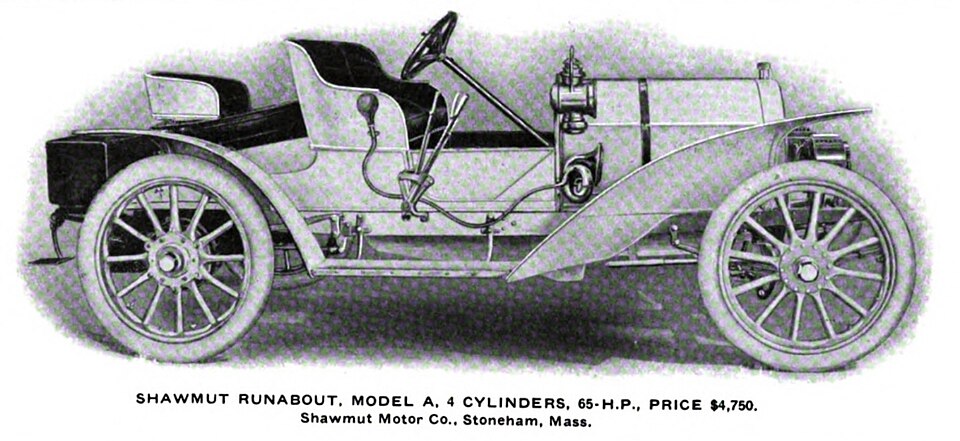
So the crowd converged on the park well before the two o’clock hour when the racers were scheduled to arrive, with one reporter pegging it at eight thousand people and another estimating twenty thousand, the masses encircling the cascading fountain and pressing in from beside both wings of the marble City Hall. In between, a cordon of bluecoats on foot and horseback had cleared the plaza in front of the steps into a paddock for the coming racers, displacing the usual newsboys, bootblacks, and bedraggled Bowery types seeking two cents for a night’s lodging. A roar along Broadway shattered the lull, announcing the approach of the racers. But when the pack materialized, you could count the cars on one hand: two Fords, an Acme, a Shawmut, and an Itala.
Of the missing five, one had a good excuse: That car, a 45-horsepower Stearns, had been entered privately by a Brooklyn wire-mesh dealer named Oscar Stolp. A part-time inventor, Stolp wanted to demonstrate his patented aftermarket suspension, which would absorb enough shock to allow the use of thin, airless rubber tires, potentially saving time in the race—and money for future consumers. Pneumatic tires often burst or wore out in as little as a thousand miles, especially under strenuous conditions, making them an expensive, time-consuming bane to early motorists. But with the F. B. Stearns Company mindful of the mounting industry boycott, Stearns personally urged Stolp to drop out, warning that he was in over his head and could never compete with a factory team willing to spend $20,000 to win. Even The New York Times entered the fray, editorializing on behalf of rule changes to level the playing field for amateurs like Stolp. The Brooklyn businessman persisted, but after he sent his car to a garage for a final tune-up, it lay in pieces when he tried to collect it for the race, hinting at possible sabotage.
Of the others, three had simply caved to the pressure campaign, while the fourth—a pricey Welch entered by New York dealer L. H. Perlman— revealed itself to be a fleeting ploy by Perlman, a former patent-medicine promoter who now called himself “Motor King” of New York. Perlman was one of the few who had advertised his participation, boasting that Buffalo Bill Cody had introduced him to two Sioux guides, “Blue Hawk Jim and Long Feather Pete.” He claimed the men had taken quickly to the powerful, easy-to-handle Welch and would excel in the race with their knowledge of the West. There was never any evidence they were real, but the press lapped it up.
Start listening to an audio excerpt of The Hardest, Longest Race!