
During World War II, Commander Harro Schacht daringly crossed the Atlantic Ocean to hunt for unsuspecting American ships in the Gulf of Mexico. In Deep Water author Michael J. Tougias shares with The History Reader the dramatic story of the sinking of the Federal before revealing how the Gulf of Mexico (now Gulf of America) continues to be dangerous waters today, although for a very different reason.
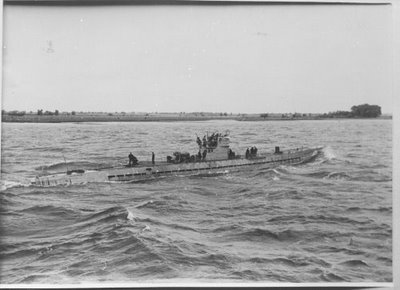
U-boat 506, commanded by Korvettenkapitän Harro Schacht snuck into the Gulf of Mexico via the Florida Straits on May 1, 1942, with the orders to sink as many U.S. ships as possible. U-boat 506, commanded by Kapitänleutnant Erich Würdemann, followed shortly thereafter on May 3 with the same mission. The commanders were to proceed toward the mouth of the Mississippi, where they might be able to send enough ships to the bottom to block river traffic. Schacht was given plenty of leeway on where to operate, depending on the defenses he encountered and the opportunities he might come across. The commander was instructed to use his torpedoes wisely, focusing on oil tankers and large freighters.
***
Commander Harro Schacht, age thirty-four, and his crew on U-507 were on high alert as they passed between Cuba and Florida on April 30. They had just crossed the entire Atlantic Ocean in a twenty-six-day period and would soon be sailing the first U-boat to ever penetrate the Gulf of Mexico. Spirits were high, and the men looked forward to engaging the enemy. They knew that by being the first of the German subs to enter virgin waters, they would have plenty of opportunities to sink American ships. All the U-boats competed with Schacht to sink the most ships or “tonnage” on a single patrol. The crew of U-507 liked their chances of being recognized as one of the best, with Schacht (pronounced “Shot”) as their ace. He had trained under Erich Topp, one of Germany’s most successful U-boat commanders, and Schacht was a sixteen-year veteran of the German Navy.
***
Off the northwestern shores of Cuba, the lookout on U-507 spotted a tanker, but it was quite small. Schacht had a decision to make. The American tanker, named Federal, was alone with no protection, but Schacht was far from the mouth of the Mississippi where he had been ordered to sink as many ships as possible. He weighed his options. He hated to waste a torpedo on a small ship so distant from his designated area of engagement, yet he also didn’t want to squander an opportunity. Like a coach who wants to gauge his team’s readiness with a relatively easy scrimmage, Schacht was curious to see how his crew would respond in action after the uneventful ocean crossing.
The commander decided to take action. He ordered his crew to bring the submerged sub close to the tanker. When they were approximately 400 yards away, directly in the wake of the tanker, the U-boat surfaced, water cascading off its grey hull. As soon as the conning tower broke the surface, crewmen sprang through the hatch to the deck gun. Schacht was going to try to sink the Federal without firing a single torpedo!
The men opened fire with the 4-inch cannon. In Schacht’s U-boat log, also known as his War Diary (Kriegstagebuchen or KTB), he wrote, “After the first shot the bridge was hit after which the steamer turned toward land, however after the second hit (third shot) stopped and set out boats.” Four sailors were killed almost instantly and the rest managed to climb in a lifeboat before the tanker sank a short time later.
Schacht stayed on the surface to make sure the Federal sank. He did this despite writing, “My presence is also known, as the sinking took place within sight of the coast.” Moving westward, another ship came into view, but this time he had to quickly submerge, noting in the log “Crash dive for flying boat type Consolidated range 3,000 meters.” He continued west, entering the Gulf of Mexico, where he prowled around the area of the Dry Tortugas, writing, “The Tortugas navigational lights burn as though it were peacetime.”
Schacht slowly pulled away and headed toward New Orleans and the Mississippi River mouth.
***
On May 10, U-507 had almost reached its goal: “The previous deep blue clear water is dark green and slightly milky. This color promises good cover from being seen from above. The distance to the Mississippi and the coast is the same at eighty nautical miles.”
Seven ships were sunk in eight days by Schacht and U-507. And this was just the beginning.
***
Today, these waters off the Mississippi can still be hazardous, but for different reasons. Boaters encounter swift currents, potential collision with hundreds of oil rigs if foggy, and sudden storms. In Deep Water, chronicles how three men on a recreational fishing boat find themselves in the water after their boat sank and must endure 28 hours treading water facing every danger imaginable….including a hungry 10-foot tiger shark. The incident happened in almost the exact spot where Harro Schacht sank one of his ships.