June 25, 1950: Korean War Began Here

dd

dd

dd

By Callie Oettinger

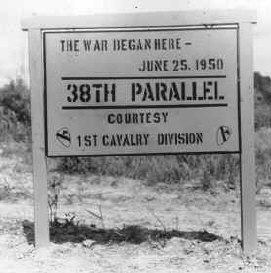
The War Began Here—June 25, 1950.
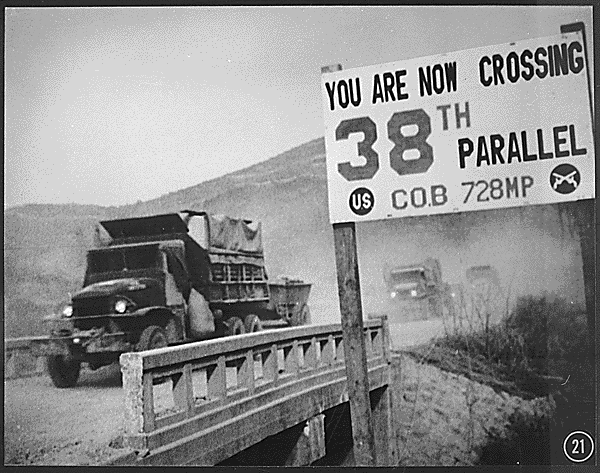
Crossing the 38th parallel. United Nations forces withdraw from Pyongyang, the North Korean capital. They recrossed the 38th parallel., 1950. Credit: National Archives
Crossing the 38th parallel. United Nations forces withdraw from Pyongyang, the North Korean capital. They recrossed the 38th parallel., 1950.
Credit: National Archives

twoo

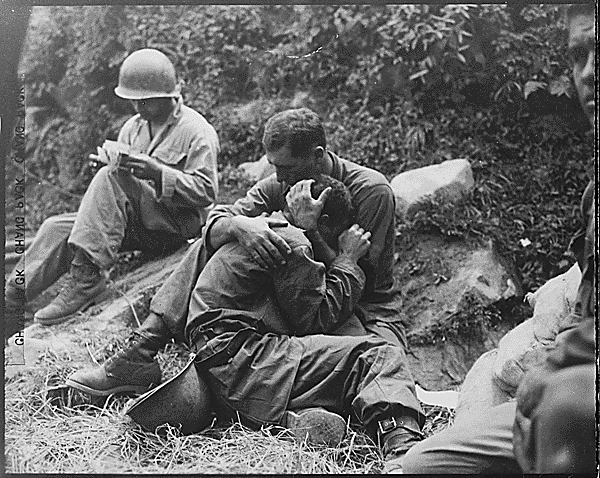
A grief stricken American infantryman
A grief stricken American infantryman whose buddy has been killed in action is comforted by another soldier. In the background a corpsman methodically fills out casualty tags, Haktong-ni area, Korea., 08/28/1950.
Credit: National Archives
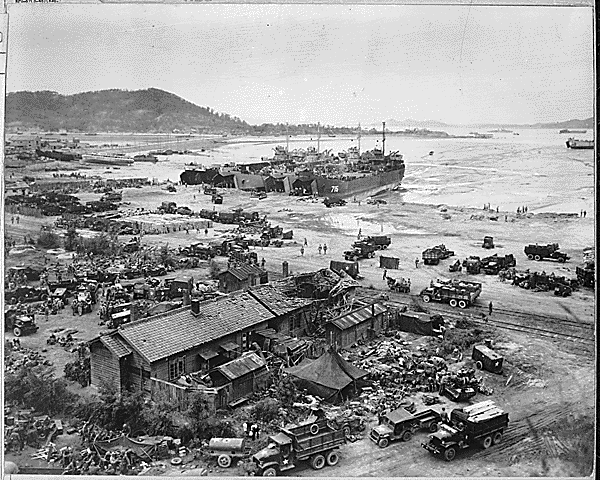
Invasion of Inchon
Invasion of Inchon, Korea. Four LST’s unload men and equipment on beach. Three of the LST’s shown are LST-611, LST-745, and LST-715., 09/15/1950.
Credit: National Archives


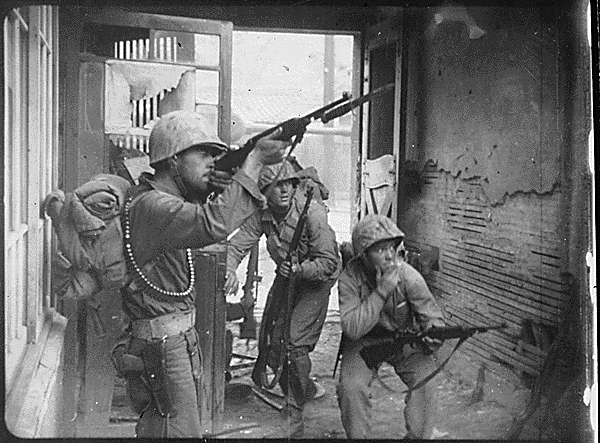
United Nations troops fighting in the streets of Seoul
United Nations troops fighting in the streets of Seoul, Korea., 09/20/1950.
Credit: National Archives
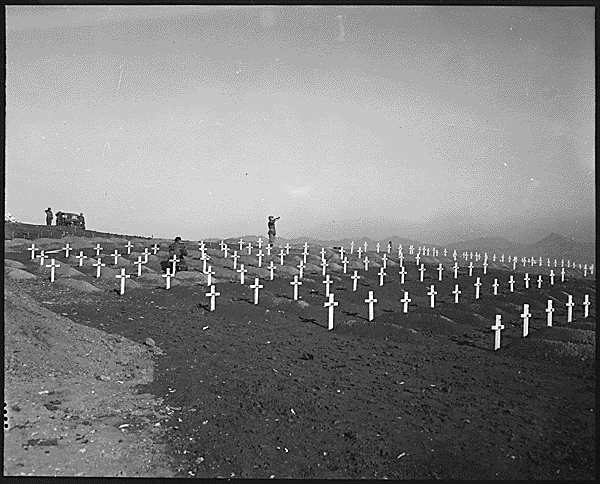
Marines of the First Marine Divisio
Marines of the First Marine Division pay their respects to fallen buddies during memorial services at the division’s cemetery at Hamhung, Korea, following the break-out from Chosin Reservoir., 12/13/1950.
Credit: National Archives
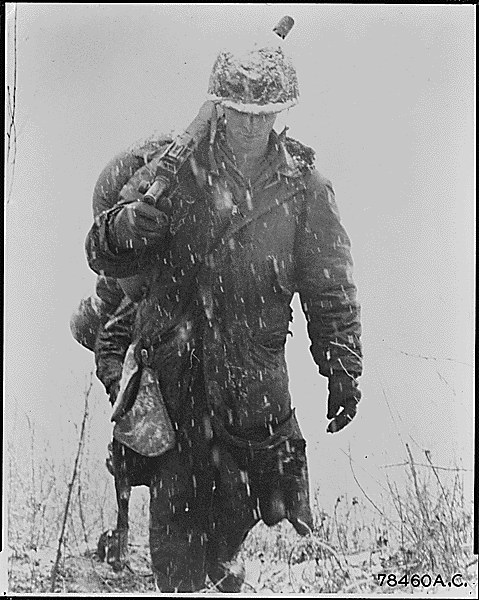
Bitter Cold, Bitter Fight. Korean War, ca. 12/1950. Credit: National Archives
Bitter Cold, Bitter Fight. Korean War, ca. 12/1950.
Credit: National Archives
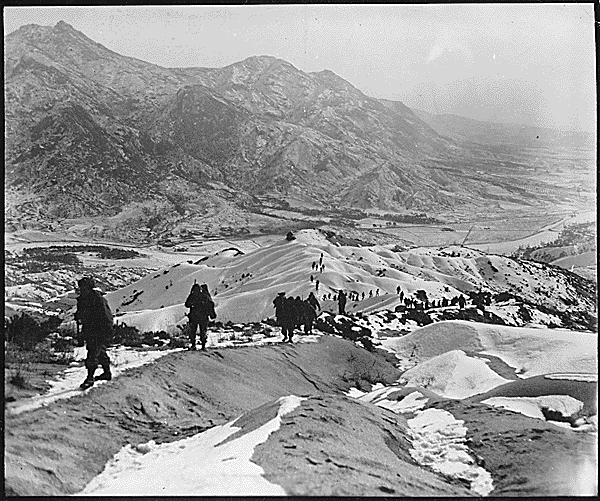
Men of the 19th Infantry Regiment work their way over the snowy mountains about 10 miles north of Seoul, Korea, attempting to locate the enemy lines and positions., 01/03/1951. Credit: National Archives
Men of the 19th Infantry Regiment work their way over the snowy mountains about 10 miles north of Seoul, Korea, attempting to locate the enemy lines and positions., 01/03/1951.
Credit: National Archives

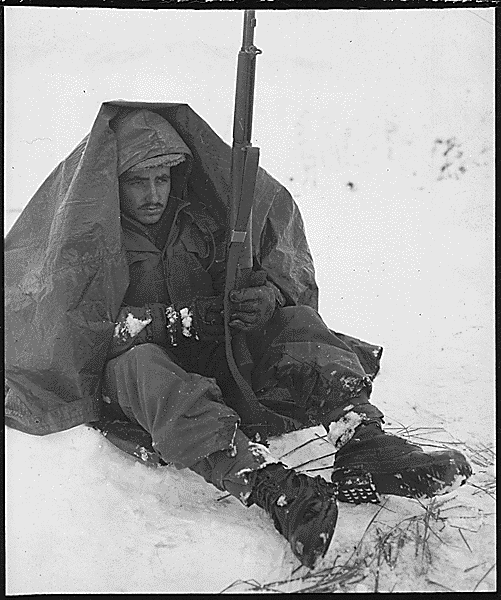
Private First Class Preston McKnight, 19th Infantry Regiment, uses his poncho to get protection from the biting wind and cold, in the Yoju area, Korea, during break in action against the Chinese Communist aggressors., 01/10/1951. Credit: National Archives
Private First Class Preston McKnight, 19th Infantry Regiment, uses his poncho to get protection from the biting wind and cold, in the Yoju area, Korea, during break in action against the Chinese Communist aggressors., 01/10/1951.
Credit: National Archives


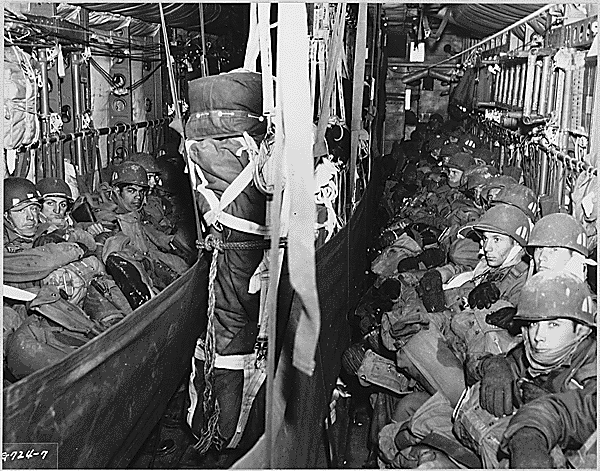
Paratroopers of the 187th Airborne Regimental Combat Team, seated in the cargo compartment of 314th Troop Carrier Group C-119 “Flying Boxcar,” “sweat out” the flight to the dropzone at Munsan-ni, Korea, in March, 1951, ca. 03/1951. Credit: National Archives
Paratroopers of the 187th Airborne Regimental Combat Team, seated in the cargo compartment of 314th Troop Carrier Group C-119 “Flying Boxcar,” “sweat out” the flight to the dropzone at Munsan-ni, Korea, in March, 1951, ca. 03/1951.
Credit: National Archives


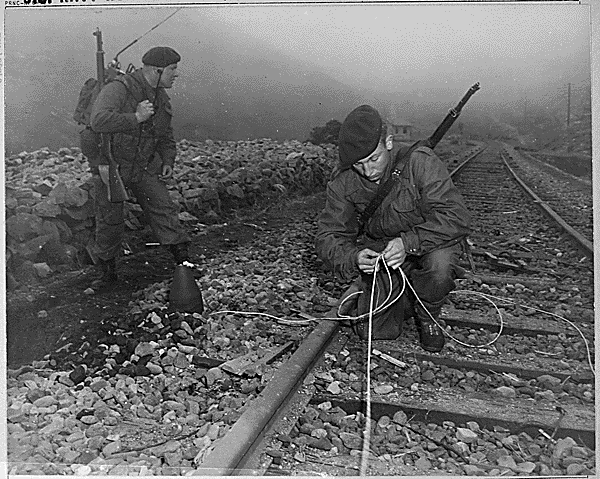
Commandoes of the 41st Royal British Marines plant demolition charges along railroad tracks of enemy supply line which they demolished during a commando raid, 8 miles south of Songjin, Korea., 04/10/1951. Credit: National Archives
Commandoes of the 41st Royal British Marines plant demolition charges along railroad tracks of enemy supply line which they demolished during a commando raid, 8 miles south of Songjin, Korea., 04/10/1951.
Credit: National Archives


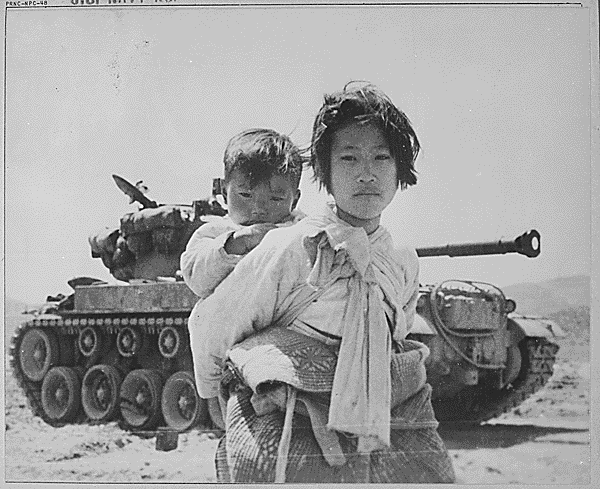
With her brother on her back a war weary Korean girl tiredly trudges by a stalled M-26 tank, at Haengju, Korea., 06/09/1951.  Credit: National Archives
With her brother on her back a war weary Korean girl tiredly trudges by a stalled M-26 tank, at Haengju, Korea., 06/09/1951.
Credit: National Archives


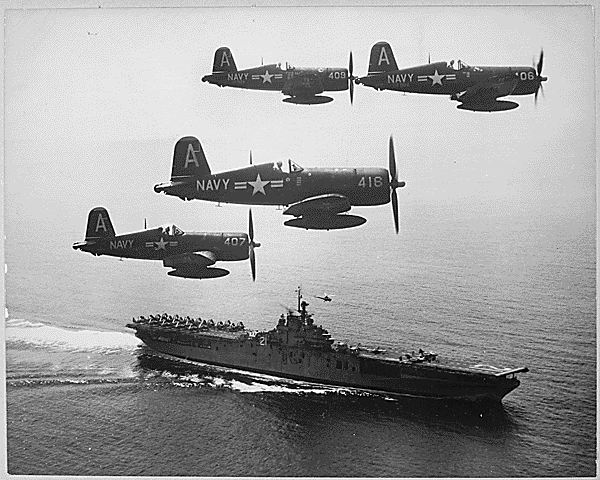
F4U’s (Corsairs) returning from a combat mission over North Korea circle the USS Boxer as they wait for planes in the next strike to be launched from her flight deck-a helicopter hovers above the ship., 09/04/1951. Credit: National Archives
F4U’s (Corsairs) returning from a combat mission over North Korea circle the USS Boxer as they wait for planes in the next strike to be launched from her flight deck-a helicopter hovers above the ship., 09/04/1951.
Credit: National Archives


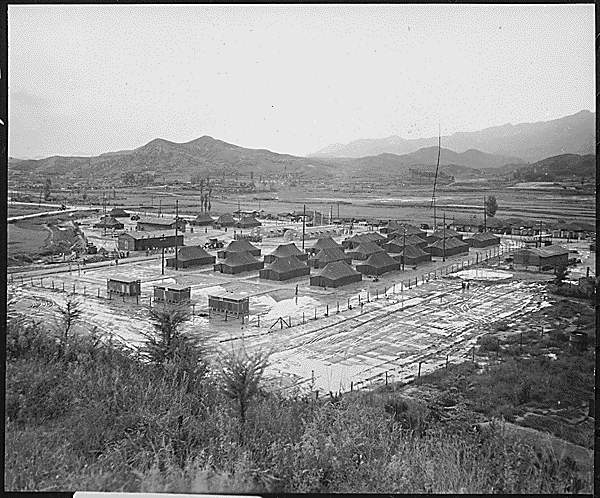
3rd Republic of Korea Mobile Army Surgical Hospital, Wonju, Korea., 09/1951. Credit: National Archives
3rd Republic of Korea Mobile Army Surgical Hospital, Wonju, Korea., 09/1951.
Credit: National Archives


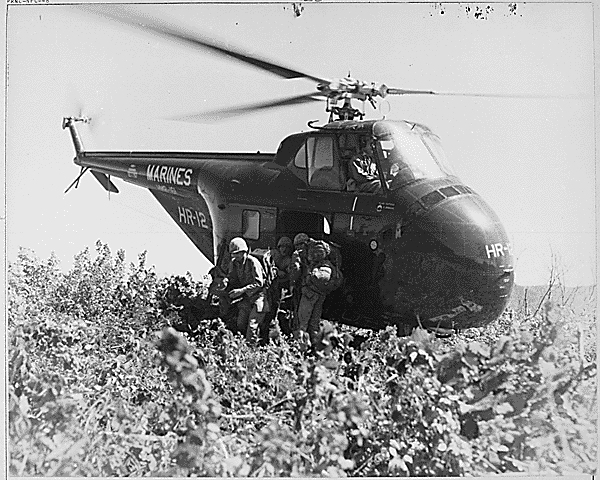
U.S. Marines of the First Marine Division Reconnaissance Company make the first helicopter invasion on Hill 812, to relieve the Republic of Korea 8th Division, during the renewed fighting in Korea., 09/20/1951. Credit: National Archives
U.S. Marines of the First Marine Division Reconnaissance Company make the first helicopter invasion on Hill 812, to relieve the Republic of Korea 8th Division, during the renewed fighting in Korea., 09/20/1951.
Credit: National Archives


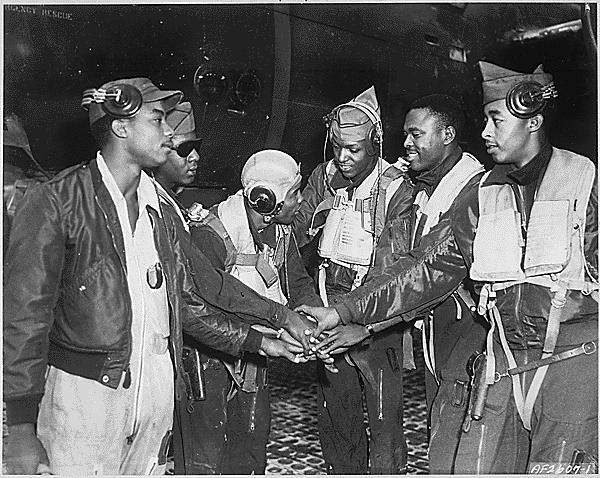
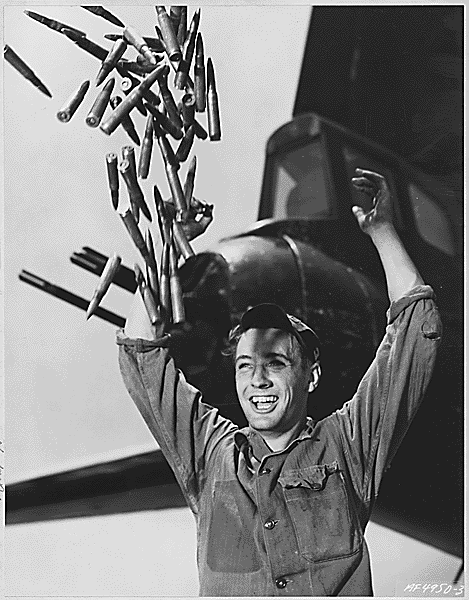
Six gunners join hands as a part of 17th Bomb Wing night interdiction teams in Korea, ca. 09/1952. Credit: National Archvies
Six gunners join hands as a part of 17th Bomb Wing night interdiction teams in Korea, ca. 09/1952.
Credit: National Archives


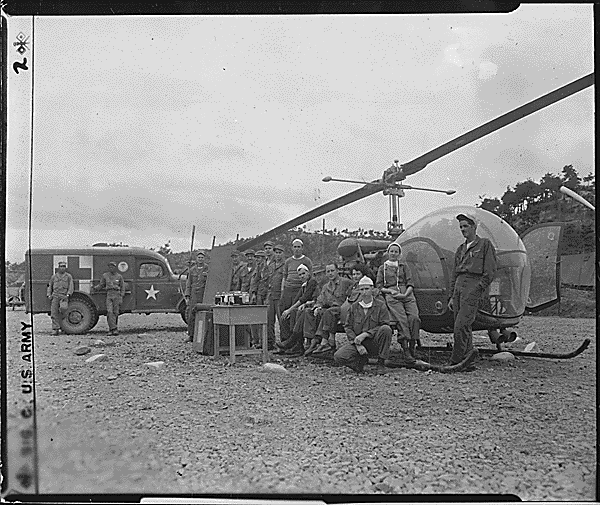
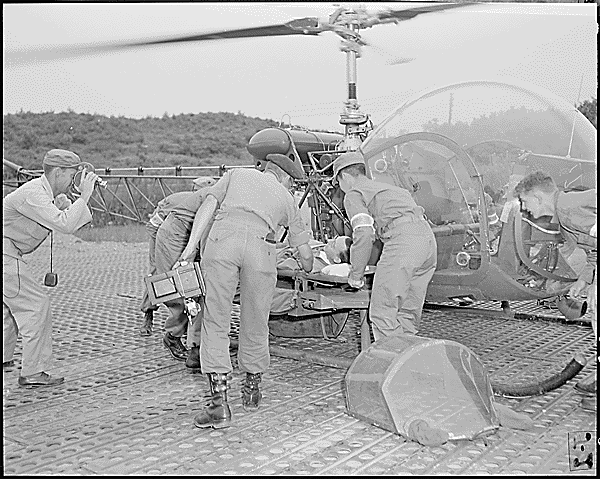
Personnel and equipment needed to save a man’s life are assembled at HQs of the 8225th Mobile Army Surgical Hospital, Korea., 10/14/1951. Credit: National Archives
Personnel and equipment needed to save a man’s life are assembled at HQs of the 8225th Mobile Army Surgical Hospital, Korea., 10/14/1951.
Credit: National Archives


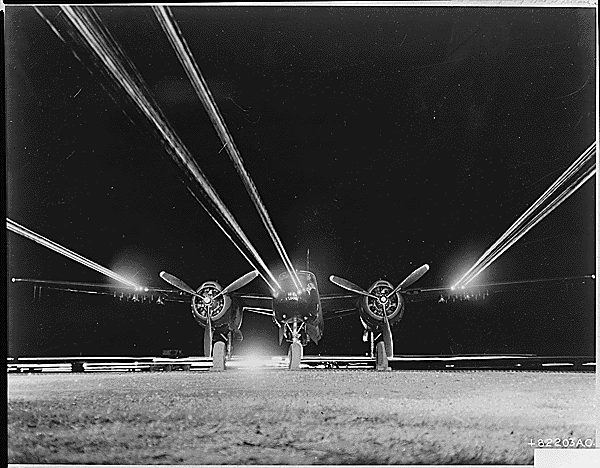
This U.S. Air Force B-26 light bomber of the 3rd Bomb Wing has its 14 forward firing .50 caliber machine guns tested prior to a night mission against enemy targets in North Korea. Pilots of the 3rd Wing nightly patrol Communist supply routes leading to the front. The B-26 night Intruders have been a major factor in the destruction of more than 53,000 enemey vehicles knocked out by U.S. Air Force units since the start of the Korean war., ca. 11/27/1952. Credit: National Archives
This U.S. Air Force B-26 light bomber of the 3rd Bomb Wing has its 14 forward firing .50 caliber machine guns tested prior to a night mission against enemy targets in North Korea. Pilots of the 3rd Wing nightly patrol Communist supply routes leading to the front. The B-26 night Intruders have been a major factor in the destruction of more than 53,000 enemey vehicles knocked out by U.S. Air Force units since the start of the Korean war., ca. 11/27/1952.
Credit: National Archives


As the words informing the world of the truce being signed in Korea reached the ears of military personnel in Korea and Japan, emotions were expressed in a variety of ways, ca. 07/1953. Credit: National Archives
As the words informing the world of the truce being signed in Korea reached the ears of military personnel in Korea and Japan, emotions were expressed in a variety of ways, ca. 07/1953.
Credit: National Archives
An unidentified POW
An unidentified POW (repatriated in the UN POW exchange) arrives by helicopter at Freedom Village, Korea., ca. 08/05/1953.
Credit: National Archives.


CALLIE OETTINGER was Command Posts’ first managing editor. Her interest in military history, policy and fiction took root when she was a kid, traveling and living the life of an Army Brat, and continues today.

The owner of this website has made a commitment to accessibility and inclusion, please report any problems that you encounter using the contact form on this website. This site uses the WP ADA Compliance Check plugin to enhance accessibility.