In the 1960s, the field of psychiatry was at a standstill. While some scientists cured polio and others identified new antibiotics, there were no major wins in the field of mental health. However, all of that changed when Dr. Solomon Snyder decided to engineer a pill to create madness. Read on to learn about Snyder’s drug-fueled quest to cure schizophrenia, as well as what inspired author Justin Garson to write about Snyder in his book, The Madness Pill.
In the middle of the twentieth century, psychiatry faced a crisis of confidence. It was the ugly stepchild of medicine, a field with no major discoveries and no cures – particularly for schizophrenia, the most debilitating mental illness. Existing interventions for asylum patients were scientifically dubious, like talk therapy, or even cruel, like lobotomy and insulin coma. Many doctors at the time didn’t think it was a legitimate branch of medicine.
Against this backdrop, a group of doctors proposed a daring idea. Instead of seeking a drug that would cure schizophrenia, what if there were a drug that made schizophrenia – a drug that could induce a temporary psychosis in a healthy volunteer? With such a drug, psychiatrists believed they could take it themselves and better sympathize with their disturbed patients. More importantly, they could study exactly what the drug did to the brain and potentially use that knowledge to cure schizophrenia.
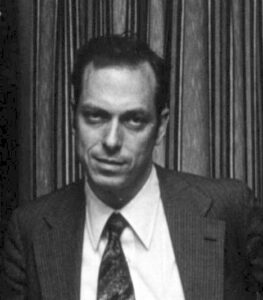
In The Madness Pill: One Doctor’s Quest to Understand Schizophrenia, I follow the story of the neuroscientist and psychiatrist who eventually did discover the “madness pill,” Dr. Solomon Snyder of Johns Hopkins University, “Sol” to his friends and family. The book traces how his search reshaped the field and helped usher psychiatry into the modern era.
In the early 1960s, after an acid trip during his medical residency, Sol became convinced that LSD was the drug he’d been looking for. That experience, he believed, gave him a glimpse into the inner world of psychotic patients. As a research fellow at the National Institute of Mental Health, and later as an assistant professor of pharmacology at Johns Hopkins University, he threw himself into uncovering exactly what LSD did to the brain. At one point, he injected monkeys with it to map which regions of the brain it activated.
Legal restrictions in 1966 brought that research to a halt, but another opportunity emerged: speed. In the late 1960s, thanks to an epidemic of injectable amphetamine use in America, doctors became aware of a phenomenon they called “amphetamine psychosis.” Speed addicts who took amphetamines for days would develop symptoms eerily similar to paranoid schizophrenia –menacing voices, strange delusions, and incoherent trails of thought. Snyder shifted his attention to understanding what amphetamines did to the brain, even giving an amphetamine-like drug to undergraduate volunteers at Hopkins to observe its effects.
His findings were striking. Amphetamines produced schizophrenia-like states by flooding the brain with dopamine. In 1975, he discovered the brain’s dopamine receptor and proved conclusively that all antipsychotic drugs work by disabling dopamine receptors. These findings led him to formulate his famous “dopamine hypothesis of schizophrenia:” the theory that schizophrenia itself is a dopamine dysfunction, not the product of unconscious conflicts or childhood trauma.
The dopamine hypothesis went on to transform American psychiatry. It introduced a new paradigm in which mental disorders could be understood in terms of chemical imbalances in the brain. His theory opened the door to the wider acceptance of the serotonin theory of depression, the noradrenaline theory of ADHD, and other neurotransmitter-based explanations. Sol even wrote popular books on the subject to bring this vision to a wider public audience. By the 1990s, psychiatry had become the science of managing mental illness by tweaking neurotransmitters in the brain.
One of the things I most enjoyed about writing the book was the opportunity to interview Solomon Snyder, who retired from Hopkins in 2020, along with several of his colleagues and friends from the 1960s and 1970s. Writing the book also had a more personal dimension for me. In 1973, my father was diagnosed with paranoid schizophrenia. In the 1980s, he cycled through institutions where doctors sought to find just the right cocktail of drugs to keep him stable. For me, writing this book was a way of making sense of his legacy.
Today, many critics argue that psychiatry relies too heavily on drugs and neglects more humanistic forms of therapy. I share the concern that the pendulum has swung too far in the biological direction. But understanding how the chemical imbalance paradigm came to dominate psychiatry is, I believe, a crucial step toward a more encompassing paradigm.