New York Times bestselling author Tilar J. Mazzeo gives a behind-the-scenes look at Rockland, Maine, the home of Mary Ann Patten and Joshua Patten. Her book, The Sea Captain’s Wife, tells the true story of Mary Ann, the first female captain of a merchant ship, and her treacherous navigation of Antarctica’s deadly waters.
When I was writing The Sea Captain’s Wife, I was interested to see in person some of the places in Maine that were important in her life and to her story, because, as a writer, following in the footsteps of the people about whom I’m writing is part of the process of seeing the world through their eyes and bringing them to life for readers. For me, following in Mary Ann and Joshua’s footsteps was a particularly interesting because, as I mention in the epilogue to the book, I also happened to grow up and have deep roots in the same small fishing village where Joshua Patten came from in midcoast Maine. I spent the first five years of my life, in fact, in Owls Head, near the Muscle Ridge Islands and the Weskeag River, where Joshua and Mary Ann dreamed of building a farm someday.
The Weskeag River is one of my favorite places, because it’s the kind of tiny village where you feel that you’ve stepped back in time. So much of Maine is touristed that, as a local, you tend to cherish those places where no one really has any reason to visit. Where exactly Joshua’s lot of land was is hard to figure out from the road, because much of that land has still never been developed and is deep woods, but in this photo you can get a glimpse of the river. This is where Joshua and Mary Ann dreamed of building a farm one day.
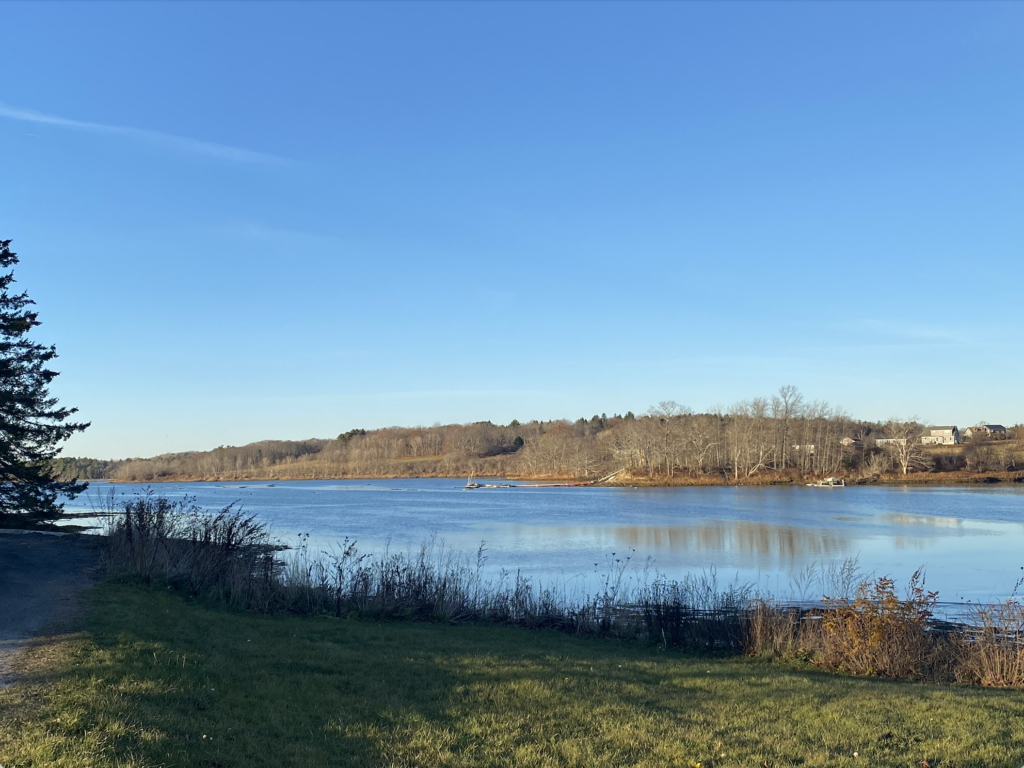
This view is taken with your back to the sea, and if you turn and look the other direction you see the little village, with its reversing tidal falls, and then the river stretches out to sea for a bit as it bends and turns. Beyond the mouth of the river are the Muscle Ridge Islands, where Joshua’s family land was and where his brother, Uriah, owned property in the 1850s.
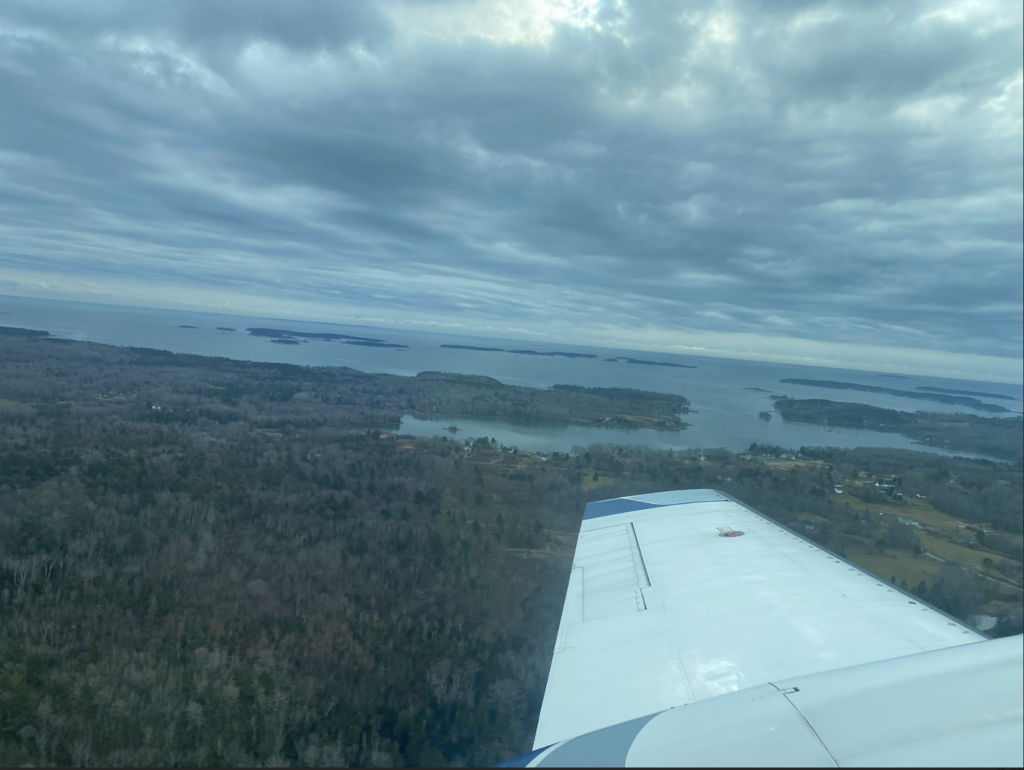
The best way to get a sense of the geography is from the air, and this is a photograph recently taken on a flight from Owls Head down to Boston, which, if you’re a first time visitor to Maine, is one of the most lovely ways to see the coast and sure beats sitting in summer traffic on Route 1.
How about where Mary Ann and Joshua lived in Rockland, while they were saving up a “competence” to build their farm? They owned a small house on South Main Street in Rockland, and I was also able from the old deed records to find the plot of land on the title register. In this photo, you can see the lot: it’s where the Maritime Energy gas station is on the left in this photo.
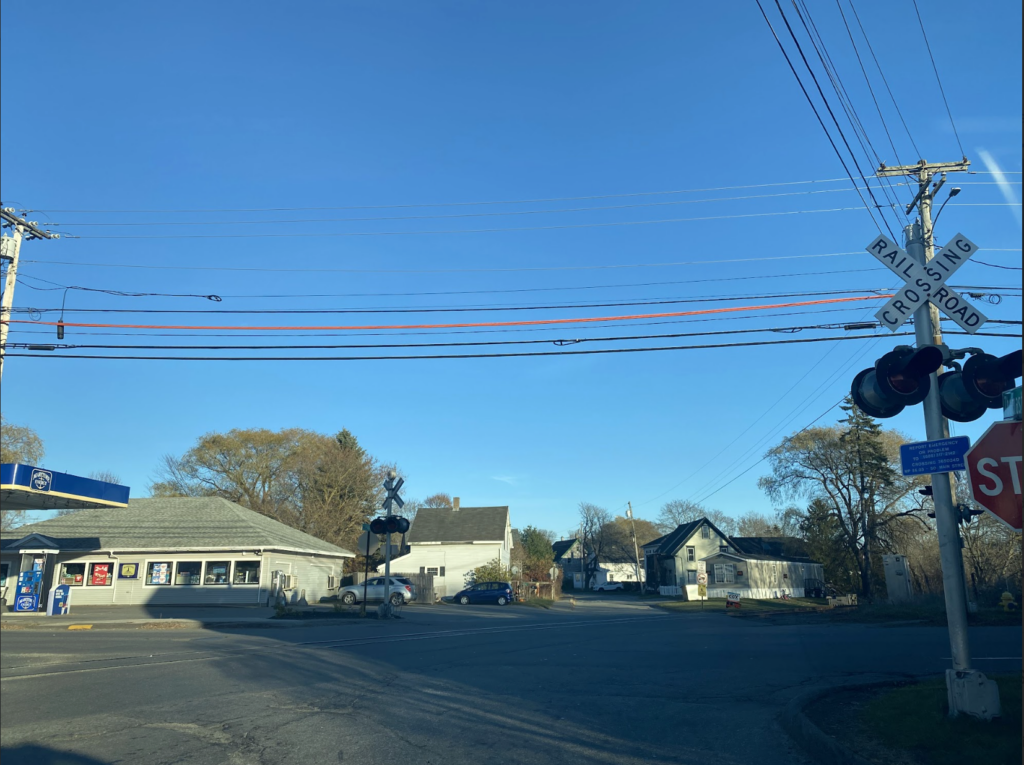
However, over the centuries that plot of land has been chopped up and divided, and while the deed today is connected to the gas station property, I actually think it’s very likely that the Patten house did survive and is that little gray house you can see behind the gas station in this picture. That house, today 10 Crescent Street in Rockland, was built in 1851, making the timing right. I think it’s probably pretty unlikely that back in the 1850s they would have built another house so close by, though I guess that’s not impossible. But more likely, the gas station lot was once the front garden of the Patten family home and the little gray house was their first residence. Straight ahead of you in this photo, not too much further down that little street that runs in front of the gray house, is Rockland Harbor and the sea.
One of the other places that it took some detective work to find was the location of the Poor Farm in Rockland, where their son Joshua Jr. was an inmate. When I was five, we moved from Owls Head to an old 1790s farmhouse just beyond the north end of Chickawaukie Lake. The Mill Stream drains out of the southern end of Chickawaukie, so we knew that area well as children because it wasn’t far from the public beach.
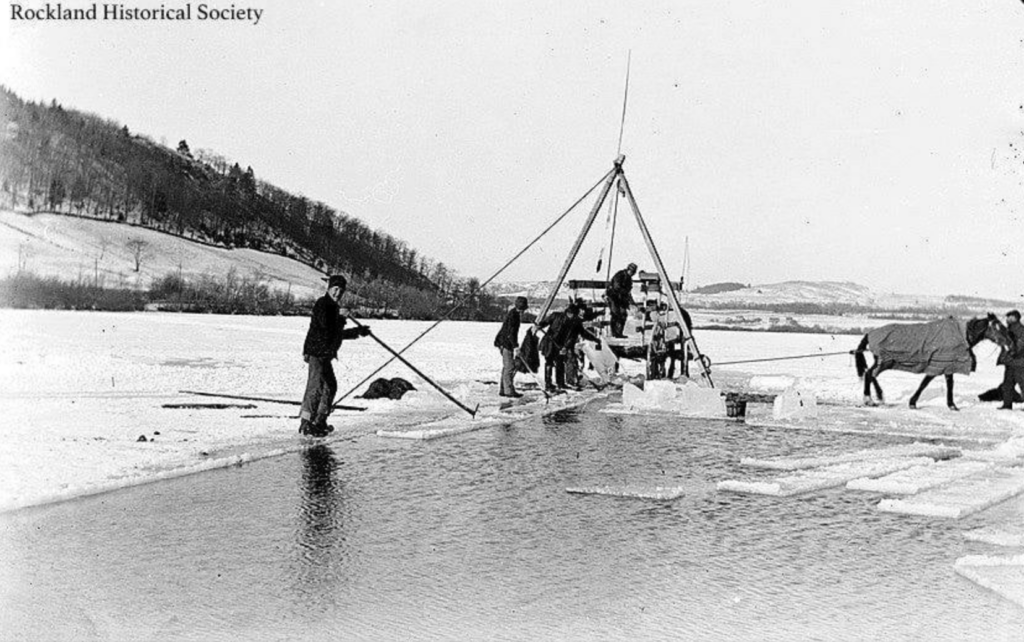
Chickawaukie was also the site in the nineteenth-century of ice houses and an ice harvest, so, when Mary Ann Patten was offered ice from Rockland in her drinks on their voyage home from Panama, it’s pretty likely that the ice came from this same location. The Rockland Historical Society has an old photograph of that ice harvesting on Chickawaukie, in fact, from the 1890s, the period when Joshua Jr. was living nearby.
From Chickawaukie, if you follow the stream back into the Highlands (which are to the left and behind you in this photo), it’s easy to lose your orientation pretty quickly because even the course of stream has changed over the centuries.
The Poor Farm today is just a wooded lot, kind of down in a gulley when the stream runs through the woods and through some culverts. My mother says that when she was growing up in Rockland, most working people lived in fear of the Poor Farm, and if you were naughty someone might threaten to send you there. There used to be a dam and a mill pond just down the way from the Poor Farm, but that’s gone now too, and what used to be farmland now is forest so it can be quite disorienting.
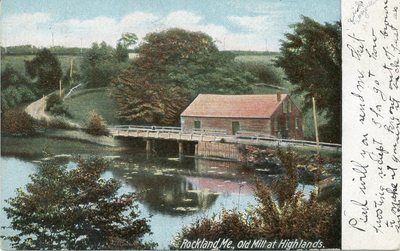
Luckily, there is a postcard from the nineteenth century that shows the old Mill and the bridge, as Joshua Jr. would have known it though. This is the site of where he drowned that day and where the Patten family story ended.