
May 11th-12th marks the 100th anniversary of the first fully documented flight to the North Pole. With an international flight crew of 16 men, the Norge lifted off from an icy hangar located halfway between the North Pole and Norway. Read on as Realm of Ice and Sky author Buddy Levy recounts this exciting, historic journey.
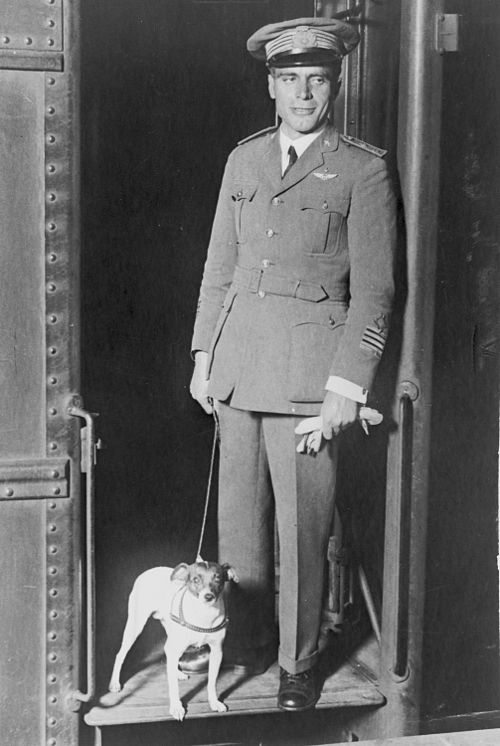
Early on the morning of May 11, 1926, Italian airship pilot Umberto Nobile was at the hangar at Kings Bay, Spitsbergen (halfway between northern Norway and the North Pole), anxiously shouting final instructions to his engineers and mechanics. Nobile was frayed, his eyes bloodshot; he had been up all night readying the Norge, a state-of-the-art dirigible purchased by legendary Norwegian explorer Roald Amundsen from Benito Mussolini’s fascist military regime. It was a spectacular flying machine, 350-feet long and capable of speeds up to 75 mph and able to remain aloft for 70-80 hours.
Now everything was set for the dangerous and unprecedented transpolar flight. Nobile informed Roald Amundsen and American polar explorer and financier Lincoln Ellsworth that they should depart as soon as the winds died down.
The international flight crew arrived just after 7:00 A.M. There were sixteen in all—eight Norwegians (including Amundsen), six Italians (including Nobile), one Swede, and the lone American, Ellsworth. Amundsen and Ellsworth, co-leaders of the expedition, had no responsibilities in flying the dirigible. Their role, as Amundsen put it, was that of explorers, “watching the terrain below, studying its geographical character, and especially keeping an alert eye out for any signs of a possible Arctic continent.” Nobile, as airship commander, managed the team of engine mechanics: navigators for steering; helmsmen running the elevators; and riggers checking the valves, ballonets, and the gas envelope in the complex operation of the twenty-ton Norge. It took a dozen skilled men to control and maneuver the behemoth machine. Mechanics rode in enclosures to maintain the three 250 horsepower engines capable of propelling the airship at a proper cruising speed of fifty-to-sixty mph for the proposed 2500-mile flight from Spitsbergen, over the North Pole, and on to Alaska.
That was the plan, anyway.
Nobile directed everyone to climb aboard. Amundsen was the last to arrive. He had been at the manager’s office reading weather reports from Alaska, which predicted “violent sleet storms and turbulence along the entire coast.” It would be at least two days before they arrived there, and Amundsen agreed with Nobile that they should take off and deal with the Alaskan weather when (or if) they got there.
Norwegian Bernt Balchen, one of Amundsen’s ground crew who had been helping load the last of the emergency gear, watched Amundsen carefully as he arrived at the Norge, seeming to understand the import of the moment. Would this be the White Eagle of Norway’s final polar exploration? Would Amundsen find a great land mass, this rumored place called Crocker Land that Robert Peary claimed to have spotted back in 1906? Balchen recorded his thoughts as his hero and countryman climbed into the gondola:
Amundsen is the last to reach the Norge…with a roll of charts under his arm, like a scientist quietly entering his laboratory. He wears a light windbreaker, a blue flying helmet, and his familiar canvas-topped mukluks, stuffed with a fine Lapland hay called Senne grass. He pauses at the foot of the steps, and the meteorologist hands him a final weather reading. He studies it and lifts his carved face for a moment to the sky, weighing his decision. It is a face that lived a thousand years ago and will live a thousand years from now.
When Amundsen had taken his place in a chair by the large window spanning the front of the control gondola, Nobile gave the order to guide the Norge, at last, backwards from the hangar. Once aloft, Nobile hovered for a few minutes one hundred feet above a snowfield near the shore, checking weight and balance, then ordered the engines started and the tethers released. Everyone in Kings Bay stared in awe at its whiteish underbelly and silvery sides suspended above the shimmering Arctic waters and glittering glaciers. They were witnessing a true engineering marvel: the pressurized envelope was taut and sleek, reinforced with metal frames at the nose and tail, with a flexible tubular metal keel connecting the two.

As the airship rose, the ground crew waved and cheered. Nobile called for more speed and the Norge climbed to 1200-feet, staying over the Kings Fjord to avoid the mountains looming on all sides. Auks and gulls flew from the high cliff walls, startled from their rookeries by the strange flying machine. As Nobile steered the dirigible toward the open northwest mouth of the bay at 50 miles per hour, Amundsen and Ellsworth looked out to see American aviator Richard Byrd and his co-pilot Floyd Bennett flying alongside them in the Josephine Ford airplane, then racing past, escorting them for an hour or so until they reached the polar ice pack. Finally, dipping their wings in a farewell salute, they sped back towards Kings Bay.
As Norge cruised north, everyone aboard was busy. Amundsen, seated next to oval-framed pictures he had hung of King Haakon and Queen Maud, took notes in his expedition diary, marking the time, the temperature, and the geographical features below. Ellsworth observed and took notes, too, sometimes getting up from his folding camp stool to stretch his legs and converse with Norwegian Hjalmar Riiser-Larsen, who was making calculations at a table with his maps, sextant and other navigational instruments. Nobile’s station was portside of the control car, where he monitored all aspects of the airship and periodically left his post to consult with the engine mechanics and riggers.
The mechanics stayed in their housing compartments with the engines at the rear of the Norge, while the riggers moved about the internal network of gangways and catwalks checking the ballonets and valves inside the massive envelope. One rigger’s job was particularly daunting: he had to periodically inspect the gas valves at the very top of the airship, and to report on any ice forming outside the envelope. Nobile commented on the dangerous task: “He had to go through a small window in the bow of the ship, climb up a steep steel ladder on the outside, and, in an icy wind blowing nearly fifty miles an hour, crawl along the top of the ship, from bow to stern, for a length of 70 to 80 yards, clinging with one hand to the guide rope that had been fixed there.”
As they navigated along Spitsbergen’s northern coast, the wireless operator sent messages of their location and progress, and the Norwegian journalist on board filed reports which were sent out. The stories ran in newspapers around the world, and as might have been predicted, both the Italian press and the Norwegian press used the moment for national pride. The Italians were brazen to the point of fault. The front-page headline of the May 11 issue of Il Piccolo read as follows: “Under an Italian flag, in the spirit of fascism, Norge sails into the polar sky.” In truth, at that exact moment it was the Norwegian flag snapping at the tail of the Norge in the sub-zero air. And inside the airship, the international team was flying in the spirit of cooperation and shared vision, not fascism. But the Amundsen-Ellsworth-Nobile Transpolar Flight had become a deeply political and nationalistic symbol for Italy and Norway, as well as a sensational story selling hundreds of thousands of papers across the globe.
As the Norge whirred north, Amundsen and Ellsworth noticed ice forming on the celluloid windows, completely obscuring their vision: “All the metal parts of the ship were covered in ice…and on the exterior of the control cabin.” This was dangerous; not only did the ice make the airship too heavy, but shards could potentially fly off and tear the envelope or damage the propellers—or both. Either could prove fatal. Nobile ordered a fast ascent to 3,000 feet above the fog, where the ice gradually dissipated.
At just past midnight, with the sun visible beyond the horizon due north, Ellsworth realized it was May 12—his 46th birthday. Lincoln Ellsworth was certainly the first person to celebrate his birthday in a dirigible near the North Pole.
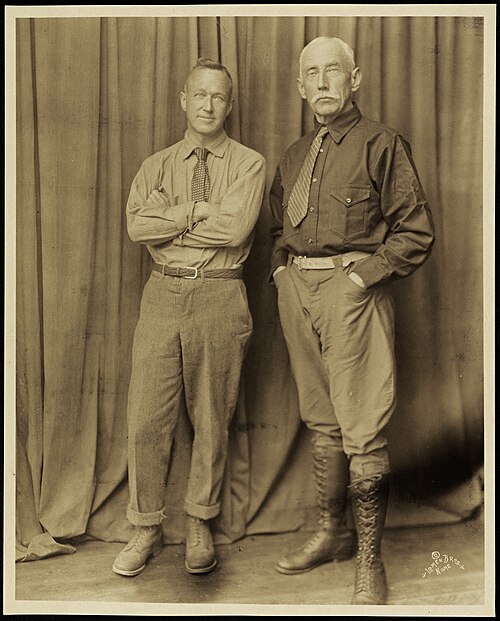
An hour later—sixteen and a half hours out of Kings Bay—Amundsen, Ellsworth, and Nobile all noticed Riiser-Larsen kneeling and peering intently out his window, “bent over the sextant in his hands.” Nobile descended through a hole in the clouds, dropping to just 750-feet above the pack to get Riiser-Larsen a clear shot of the sun. The two other navigators were also engaged checking and rechecking their position based on the magnetic compass, prior radio bearings, and their own sextant observations.
The cabin drew eerily quiet, with only low, constant humming of the engines outside. Everyone knew what was happening and no one spoke. Nobile brought the Norge down to 600-feet, and then Riiser-Larsen, pressing his eye to his sextant, saw the image of the sun covering the bubble. “Here we are!” he exclaimed. Nobile descended lower still, then had the engines throttled down. “Ready the flags!” he and Riiser-Larsen yelled in unison. It was now 1:30 A.M. on May 12, 1926.
The silent dirigible, running at a slow idle, hovered there, just above the icy surface at 90° N, an unfixed, ever moving place of immense significance. Amundsen and Ellsworth went to the gondola window with their flags (Ellsworth’s had been given to him in a ceremony by U.S. President Calvin Coolidge). The riggers and engineers—everyone on board—came forward and removed their hats. The flags had been affixed to heavy metal vanes to ensure they stuck in the ice. Amundsen dropped the Norwegian flag, then Ellsworth tossed his American flag. Nobile appeared, having removed the large Italian flag from the casket he had promised Mussolini to protect it in. Nobile let it go, and soon all three metal stakes were impaled in the ice next to one another, their multi-colored banners waving in the Arctic wind.
They had achieved the seemingly impossible: the first fully documented flight to the North Pole. And in the process, Roald Amundsen had cemented himself as the greatest explorer in polar history: first to the South Pole, first to navigate the Northwest Passage, and now first to certifiably (claims by Americans Frederick Cook, Robert Peary, and Richard Byrd were all unsubstantiated) reach the North Pole.
The rest, as they say, is history.