
Many U.S. soldiers fought bravely in Europe, but only a few of them were U.S. Marines. In The Phantom, authors Bob Drury and Tom Clavin share the extraordinary story of Major Pierre “Pete” Ortiz—a scout, saboteur, and French Resistance leader working in the heart of Nazi-occupied France. Read on for an exclusive excerpt shared with The History Reader, or scroll down to the bottom of the post if you prefer to listen to the excerpt.
Chapter 17
The Belly of the Beast
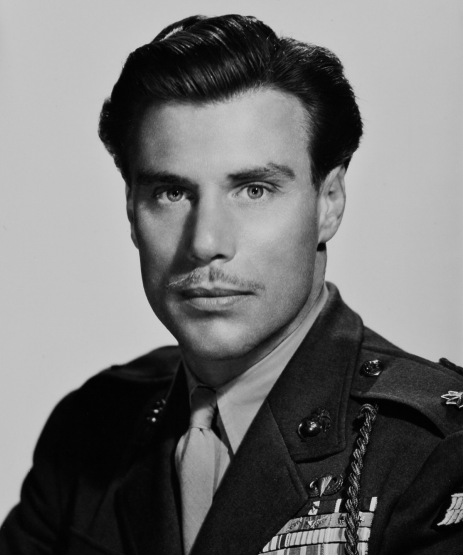
Under the guidance of Pete Ortiz and Henry Thackthwaite, by mid-March 1944, the once-motley collection of partisan resistance cells spread about the forested peaks and valleys of southeastern France was gradually evolving into disciplined, if miniature, armies. Buoyed by the success of their compatriots in the Jura, Ortiz noticed a tactile enthusiasm in the Vercors maquisards as they familiarized themselves with their newly acquired weaponry, recovered from the nightly supply drops. He separated the fighters into specialized teams for instruction on how to operate the Vickers machine guns, automatic rifles, bazookas, fragmentation grenades, and radios now in their possession.
Such was the haul dropped by the fleets of Anglo-American supply planes that Ortiz was able to oversee the establishment of several dressing stations between Lyon in the north and Valence in the south to treat the wounded he expected to take. Even his request for extra payloads of French francs to compensate potential widows and orphans was granted, thanks to de Gaulle’s access to the gold bullion smuggled out of the country four years earlier by the former Premier Paul Reynaud. Such was the situation that even a second inconsequential assault by German troops on the Maquis holed up in the Glières Mountains of the Haute-Savoie did little to dampen the resistance spirit. Wehrmacht infantry had swarmed the partisan stronghold atop the Glières Plateau. But thanks to the early-warning systems Ortiz had put in place, the maquisards there had received adequate notice, and most escaped, only to regroup after the Germans withdrew.
Now, with Ortiz deeming his Vercors-adjacent networks honed into combat shape, he began to draw up plans for offensive operations. But first, he needed transportation. Mules and horse carts did not make for the quickest of getaways from hit-and-run operations. So Ortiz inquired if the maquisards had managed to procure Nazi uniforms on any of their storehouse break-ins. They had. This gave the American an idea.
***
Winter nights in France’s alpine regions regularly feature a biting wind blowing hard from the mountains, pushing heavy clouds that scud past what had lately become known as a glowing bomber’s moon, peeking through the rifts. So it was that beneath one such soft shimmer of light that the hijacked one-and-one-half-ton German personnel carrier rumbled up to the gate of the Wehrmacht motor pool on the outskirts of Grenoble. High, parallel chain-link fences topped by razor wire surrounded the compound. It was well past midnight, and the sole guard, bundled in a woolen winter parka and cradling an MP 40 Maschinenpistole in one arm, raised his other gloved hand, palm out. Pete Ortiz, clad in a dark suit and tie and white flannel shirt beneath a long black leather trench coat, leaped from the vehicle’s front passenger seat. His Gestapo officer’s cap, replete with the organization’s trademark death’s-head skull and crossbones, was pulled low on his forehead. He barked a string of orders in crisp German, adhering to the secret police’s guiding principle—never speak when you can shout.
The cowed sentry backed away, swung open the gate, and pointed to a concrete blockhouse with the word Kommandantura stenciled above the door. Inside, a clutch of shivering enlisted men, each seemingly younger than the next, huddled around a flaring wood stove. By this time, the Free French Col. Pierre Fourcaud had recovered from his injury and been parachuted in to join the Union team, and it was the colonel who had suggested that given the inherent Teutonic reverence for rank, the loathed overnight guard duty was typically drawn by teenage enlisted men with the least experience. Ortiz, flanked by Fourcaud and a squad of similarly dressed maquisards, their holstered 9 mm Walther PPKs bulging beneath their own leather coats, demanded to see the ranking officer.
A young Haúptmann, or captain, appeared from a back office, and Ortiz swaggered toward him, brandishing a fistful of forged documents. He demanded the immediate delivery of a fleet of vehicles for an early-morning roundup of suspected partisans. The captain apparently failed to notice that Ortiz was wearing a pair of slightly scuffed brogans and not hobnailed jackboots.
Even experienced Wehrmacht officers rarely dared to question a member of the feared Geheime Staatspolizei. The officer turned over the keys to ten Mercedes-Benz staff cars. Over the ensuing months, the automobiles were spotted fleeing the scenes of mysterious fires at munition plants, dynamited bridges and train trestles, bank robberies from Lyon to Avignon, and nighttime raids on town and village government halls, where blank identity papers and letters of transit disappeared. Returning from one such foray, Ortiz and his men were intercepted by a platoon of riflemen blocking the road. Nine Germans were killed or wounded in the ensuing gunfight, while the Maquis suffered no casualties.
As the burgeoning bands of maquisards gained more confidence, as well as a greater expertise with their new weapons, Ortiz’s targets grew proportionately. One morning, a messenger arrived at plateau headquarters from Grenoble bearing the timetable of a troop train bound for Lyon, a key hub for German transportation routes into Mediterranean France. That afternoon, Ortiz and Thackthwaite, each in full uniform, led a company of 140 partisans to scout ambush sites. They sought a bend in the tracks near a height overlooking the rails.
They found both and unpacked the tools of their trade—a zinc ammunition box packed with cheddite from a munitions drop, a compression fuse consisting of a sulfuric acid vial, a yellowing newspaper impregnated with potassium chloride inserted under the box’s lid. The device was lodged in a small hole dug out beneath the curve in the rails. The weight of the locomotive would activate the petard. With that, Ortiz and the others settled into positions along the forested hillside. Snow covered the ground, and the icy air was dead still. Someone, somewhere, was burning wood in a tiled stove.
The sun was low in the west, the sky the color of a mussel shell, when the scout on horseback cantered into view atop a low hill less than a mile away. A boy. Streams of white vapors flowed from the mouth and nose of the huge Percheron, accustomed to pulling a plow or a cart. It strained against its rider. The lad waved his cap. The click of the train’s wheels on the rail joints was soon clearly audible, slowing for the bend.
The explosion sent a murk of rock and soil skyward. The blown locomotive skittered, its wheels chewing up the tracks before the big engine heeled over on its side, taking its coal tender with it. Amid the ensuing pitch and frenzy, German soldiers scrambled from the remaining cars, only to be decimated by a withering combination of rifle and machine-gun fire pouring from the heights above. A bazooka shell blew out the walls of the second-to-last carriage, setting its wooden frame on fire. The flames, illuminated by the waxing gibbous moon, lit the hillside. Clearly visible, wielding a Thompson submachine gun with a drum magazine, was a U.S. Marine in full uniform. The attackers left close to three score bodies clad in field gray littering the side of the tracks before disappearing into the darkening mountains. Again, without having suffered a casualty.
The wives of the hospitalized French train engineer and coal tenders were surprised to subsequently receive packets of francs through their mail slots to cover medical costs. The bank robberies had proven their worth.
Start listening to an audio excerpt of The Phantom!
The Phantom. Copyright © 2026 by Bob Drury and Tom Clavin. All rights reserved.