In the 1950s, the field of psychiatry had nothing to show for itself. While polio was being cured, antibiotics were being discovered, and cancer research was developing, the mental health world had no wins. Asylums were full and nobody had figured out how to fix insanity—specifically schizophrenia, the severest mental illness. Scientists became convinced that if they could engineer a pill to create madness, then they could cure it. Justin Garson’s The Madness Pill tells the story of Dr. Solomon Snyder, whose experiments with mind-altering drugs helped change the way we think about the causes and treatments of schizophrenia. Read on for a featured excerpt of this rollicking history book about the man who hated science yet changed the field of psychiatry forever. If you prefer to listen, an audio excerpt is available at the end.
Chapter 1
A Mandolin
June 10, 1962. A red Volkswagen Beetle sped down Highway 50 in West Virginia not far from the Ohio border. The sun was setting. Sol and Elaine had been driving for over seven hours. They had gotten married that morning in Washington, DC. Now they were on the way to San Francisco so he could finish his medical residency and become a psychiatrist. He was twenty-three.Sol looked at Elaine. She was leaning against the passenger door looking at him. She smiled. An orange streak of sunlight covered the bottom half of her face. He laughed. He couldn’t quite believe it was possible for a person to contain as much happiness as he felt at that moment.Sol and Elaine had met less than a year before, in the fall of 1961. He was a medical student at George Washington University. She was a teacher in training. She was two years younger than him. He’d fallen in love instantly.Sol had a handsome face with sharp, lean, almost athletic features, despite the fact that he carefully avoided sports. Throughout high school, he’d immersed himself in classical guitar and philosophy. In his high school yearbook, while most of his peers stared straight into the camera with a forced smile, he gazed off to the right, serious and detached. He spoke with a gentle, almost Midwestern softness, despite being a product of the East Coast—his mom was from New Haven and his dad had grown up in DC. Sometimes when he spoke, he would close his eyes slightly, which further softened his demeanor and gave him a relaxed, contemplative air. But when he was inspired, he’d be filled with a manic energy and would pace around the room waving his hands like little birds, or he would sit holding his head and rocking back and forth.Elaine was beautiful. She had neatly styled short hair. Dark curls hung down over her forehead. She had high cheekbones, a gentle face, and an easy smile. She was also the spitting image of Estelle Ramey, Sol’s physiology professor at George Washington University who’d encouraged him to study schizophrenia.Things moved quickly for the couple. Sol and Elaine had met in the fall and were engaged by Christmas. They married six months later. After his year of medical residency, they planned to return to DC so she could finish her degree. He’d already secured a competitive internship at the National Institute of Mental Health in Bethesda, Maryland, where he would do cutting-edge research on the biology of mental illness.When Sol was a child in Hebrew school, his rabbis had taught him that there were many ways that God could bless a person, and these were captured by different words. One word, baruch, meant the kind of blessing in which God bestows favors upon you. Another, ashrei, meant happiness, a kind of inner joy. As he drove west, Sol felt that he was being blessed in the manner of ashrei. He had Elaine. He had a prestigious medical residency that would let him become a psychiatrist. And he had his freedom. This was the first time he had left his parents’ home in the Takoma neighborhood of Washington, DC. One reason he chose San Francisco was that he wanted to experience life as far from his family as possible.
***
In some ways, Sol’s entry into biological psychiatry started with a mandolin.In 1948, on Sol’s ninth birthday, his maternal grandfather, Josef, gave him a mandolin. Josef had emigrated from Vitebsk, Russia, in 1913 and settled in New Haven to raise his family. He came to live with his daughter and the Snyder family in Washington after he became a widower, as his diabetes was making it increasingly difficult for him to live without assistance. Eventually the doctors amputated one of his feet, and the other limb right below the knee. In Russia, Josef had played numerous stringed instruments, including the balalaika, an instrument that resembles a guitar with a comically large, triangular body.Sol had always been musically gifted. At the age of five, he played piano on a radio program, Uncle Bud’s Amateur Hour. He also briefly played clarinet. But he dropped those as soon as his grandfather Josef gave him the mandolin. The mandolin mysteriously unlocked something deep in his young personality. The combination of free-flowing creativity and rigorous technical dexterity it required gave him an outlet for his adolescent energy. Beauty fused to mathematical precision. Joy wedded to unbending reason.At twelve, he gave up the mandolin for a more modern instrument: classical guitar (or Spanish guitar). Unlike an ordinary acoustic guitar with steel strings, the Spanish guitar has nylon strings that are spaced far apart. It emphasizes intricate fingerpicking rather than chord-strumming. In high school, despite being captain of the chess team as well as a member of the French club, the science club, the dance club, and the polemics club, Sol devoted hours a day to perfecting his guitar playing.Sol’s father, Sam, was delighted at his son’s newfound passion for Spanish guitar. Sam himself was inclined toward woodwind instruments, specifically flute and clarinet. In 1927, Sam and his five brothers had started a band, the Snyder Syncopators, and played around town. But Sam’s real talent was for numbers. In 1936, Sam took a job in a small division of the US War Department, the Signal Intelligence Service, a precursor to the National Security Agency He served as a cryptanalyst and during the war helped break Japan’s formidable Purple code. After the war, he threw himself into the emerging world of electronic computers and helped build one of the first electronic computers for the NSA, the massive ABNER. Sometimes he brought Sol to work so he could admire the large machine, which occupied an entire office of the Army Security Agency headquarters. When Sol was ten, Sam taught him how to write in “machine language.” Sam was proud to earn enough money to support both his aging parents as well as his growing family.Sam wanted Sol to have the best Spanish guitar teacher possible. Everyone knew that the best classical guitarist in the city was Sophocles Papas, a Greek composer and veteran of the Balkan Wars. Papas ran the Guitar Shop, a cramped, second-floor walk-up in a Spanish-villa-style building about six blocks north of the White House. The walls were lined with guitars, strings, and accessories. Large sections of the floor were given over to guitars and mandolins propped up neatly in stands. Bookshelves spilled over with music books. Papas opened the store in 1922 and it quickly became legendary in the music community. Papas made guitars for presidents, and his students included Charlie Byrd and “Mama” Cass Elliot. His prices were exorbitant but worth it to Sam.Sol’s mother, Patricia, born Paya Roselyn Yakerson in New Haven, was also overjoyed with Sol’s passion for classical guitar. She was a creative whirlwind who could never quite settle on one pursuit. After the war, she was consumed with entering newspaper and magazine contests, the kind where you come up with the best caption, the best jingle, the best tagline. She had an inexplicable flair for them. In 1952, she won the ten-thousand-dollar jackpot on ABC’s game show Stop the Music! (That would be close to a hundred thousand dollars today.) She won kitchen appliances, wardrobes, even a trip to Jamaica. She started a social club, the Carefree Circle Club, for young government employees who were new to the city. It earned a write-up in the Washington Star. She became the manager of the club’s baseball team, even though she knew little about the game.Patricia wasn’t musically inclined but she loved getting her kids into the public eye. The world needed to see their talent. Her first child, Elaine, was an artistic prodigy. At the age of five, she could draw a perfect likeness of a face. By high school, with Patricia’s encouragement, Elaine had developed a complicated performance in which she sang a song and drew a portrait at the same time. Patricia helped her land a spot on national TV. Sol’s younger sister, Carolyn, was a natural beauty. Patricia entered her in various beauty competitions. When she got older, she was a finalist for Miss District of Columbia, a title that feeds into the Miss America Pageant. Sol’s younger brother Irving played guitar and banjo. The baby of the family, Joel, was bound for musical theater. At a young age, Joel appeared on the TV show The Original Amateur Hour. Years later Sol hinted at a certain amount of resentment among the kids. “Mom was complex,” he recalled, “a notorious stage mother.”At sixteen, Sol had to make a big decision. He was so good at classical guitar that the world’s master, Andrés Segovia—a friend of Papas—invited Sol to study under him. Sol could have spent the summer in Italy and then pursued a career as a professional musician. His mother wanted him to pursue music; his father simply wanted to support his son’s decisions. Sol turned Segovia down. Later he said he turned the offer down because music wasn’t “a good job for a nice Jewish boy” like himself. In the 1950s, Takoma was a largely Jewish neighborhood. Partly because of this, he was sheltered from the anti-Semitism that ravaged the city. Many of the boys at his high school, Calvin Coolidge, believed that medicine and engineering were the only serious career choices in life.More realistically, it was probably just too hard to make a living as a musician. But, Sol reasoned, he could make a living as a doctor. Sol chose medicine.
***
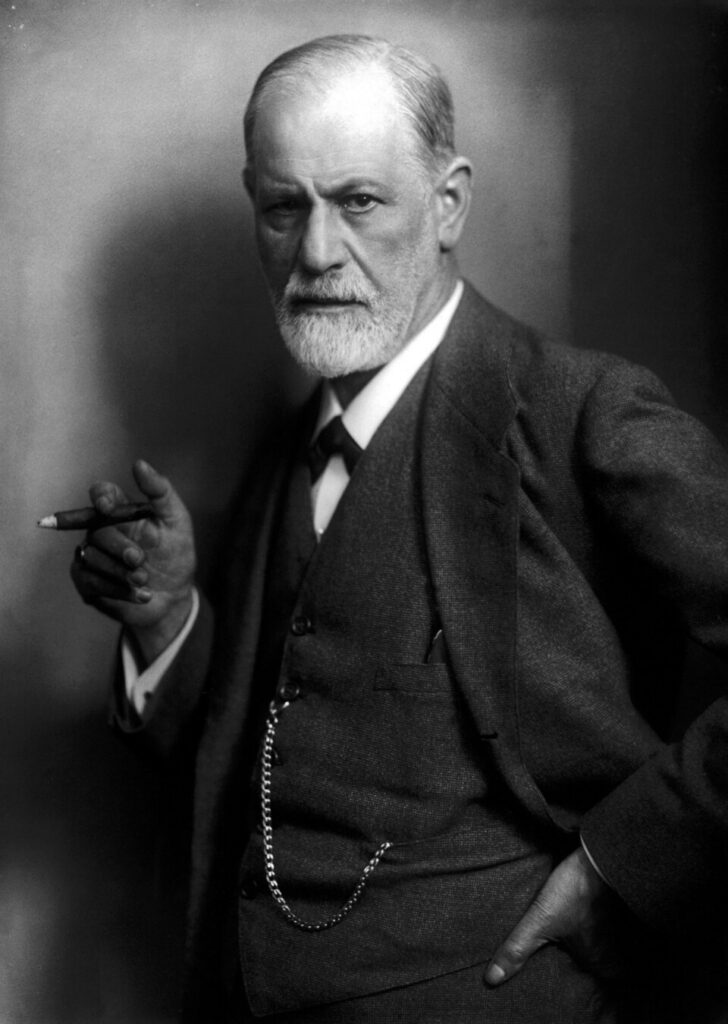
There was just one problem with Sol’s career choice. He hated science.High school chemistry was about memorizing long lists of chemical reactions and arcane definitions. The standard textbook of the day was Fred Hess’s Chemistry Made Simple. Despite its friendly pink, magenta, and tan cover, it was a dry, exhaustive recitation of the behavior of gases, liquids, acids, and alkalis. It was strangely lacking in illustrations. Although he was a diligent student and could force himself to memorize it, Sol despised it. Years later, he described his attitude toward the coursework as “Here’s a phone book. Memorize it.”Besides guitar, Sol’s other passion was philosophy. In 1952, at the age of thirteen, he discovered the great German philosopher Friedrich Nietzsche. He inhaled Nietzsche’s works, among them Thus Spake Zarathustra, Beyond Good and Evil, and The Antichrist. For Sol, reading Nietzsche was like opening a portal into the deep workings of the human mind. Nietzsche’s basic premise is that people are, first and foremost, animals. Our minds aren’t ruled by calculation and reflection but by instinct and habit. We might think we’ve risen above the beasts, but we never entirely do. We’re always chained to our instincts. Nietzsche saw humanity as being swept along by a grand unconscious mind, like a great river. The conscious self, the “I” that supposedly thinks and chooses and acts, was like an eddy in this river. Nature thinks through us, acts through us, chooses through us.Sigmund Freud, founder of psychoanalysis, holding a cigar. Photographed by his son-in-law, Max Halberstadt, c. 1921 Photo courtesy of Wikimedia Commons.From Nietzsche, Sol moved on to the writings of Sigmund Freud. Freud was also profoundly influenced by Nietzsche’s books. Freud once said that Nietzsche “had a more penetrating knowledge of himself than any man who ever lived, or was ever likely to live.” Sol devoured the numerous thick black volumes of Freud’s Collected Works. He even read Ernest Jones’s large, three-volume biography on Freud.For Sol, Freud’s best books, The Interpretation of Dreams and The Psychopathology of Everyday Life, read like fast-paced detective novels. Why did I forget the name of that town? Why did I just call my boss “Dad”? Why does my patient arrange her pillows into a diamond shape every night? Sol delighted in Freud’s ability to find reason, logic, and necessity in what lesser minds dismissed as random and accidental. Dreams meant something. Forgetting meant something. A slip of the tongue meant something. Madness meant something. A young girl compulsively arranges and rearranges her pillows as a distorted symbolic fulfillment of her desire to sleep with her father. For Freud, the simplest word or gesture was a complex puzzle to be solved.Thanks to Freud, Sol decided to become a psychiatrist. It was the ideal solution to the problem of wanting to be a doctor but hating science. As he later recalled, “I rationalized that if I could stomach the science courses of college and medical school, I might become a psychiatrist that, to my naïve way of thinking, wouldn’t differ too much from a life in philosophy.” He was particularly intrigued by schizophrenia—the pinnacle of madness and the most complex puzzle of all. In his vision of psychiatry, he saw himself sitting quietly with schizophrenic patients and contemplating their unmapped inner worlds. He wondered if someday he might solve the riddle that had confounded Western medicine for over two thousand years.
***
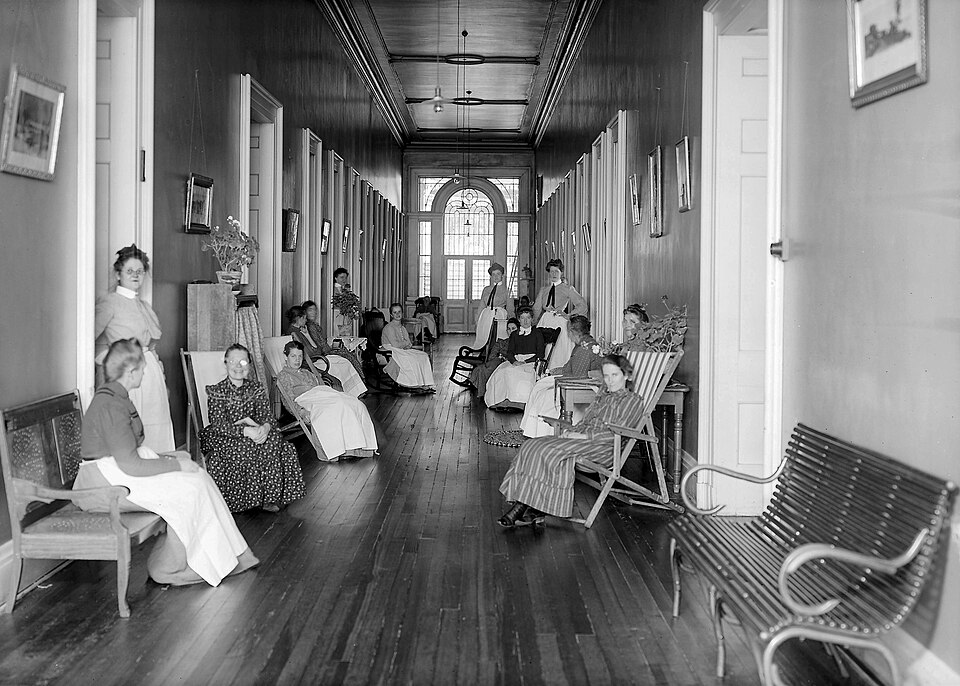
Schizophrenia has always been psychiatry’s white whale, its cure an elusive Holy Grail. Even the ancient Greeks saw madness as one of medicine’s chief puzzles. Of course, they didn’t have the term schizophrenia, which was coined in 1911 by the Swiss psychiatrist Eugen Bleuler to describe the “splitting” of thought, emotion, and behavior that causes psychological pandemonium. But as early as 400 BC, followers of the sage doctor Hippocrates on the windy Greek island of Kos described in detail how the mind could break from reality like a ship unmoored from its dock. They called this unfortunate condition mania.Yet the history of the treatment of madness, far from representing the slow but steady march of science, was until recently a series of false starts, futile debates about method, and pointless, even cruel, interventions. For the Hippocratic doctors, mania was a disease like any other, caused by an imbalance in the four humors: black bile, yellow bile, blood, and phlegm. These imbalances blocked the flow of air to the brain. Hallucinations, delusions, and unprompted terrors were the symptoms of an air-deprived brain. Its treatment? Restoring the balance of the humors through profusely bleeding the patient or inducing vomiting or diarrhea with the poisonous plant hellebore. The Hippocratic doctors vigorously denounced the religious healers of the day, such as the priests toiling in the temple of Asclepius. The priests argued that madness was a punishment from the gods and that healing came through repentance, along with sacrifices that helped maintain the temple’s operations. Yet neither approach had any factual basis, and any success either group had was likely due to the placebo effect— merely giving a patient special attention and the hope of a cure can be healing in itself.Debates about the treatment of madness persisted through the centuries but led to little progress. In early seventeenth-century England, doctors and priests often clashed over sensational cases; for example, that of young Mary Glover. In 1602, she was afflicted by a slew of symptoms, such as convulsions, fits, and terrors. For the priests, this was a case of demonic possession due to witchcraft, and Mary’s crabby, aloof neighbor Elizabeth Jackson was the prime witch suspect. For physicians, among them outspoken Edward Jorden, these were symptoms of a medical condition known as hysteria, or “wandering womb.” During Elizabeth Jackson’s trial, Jorden argued that Mary’s afflictions had nothing to do with witchcraft. Rather, as her dislodged womb drifted from place to place, it pressed into various organs—the heart, the lungs, the liver—and caused her strange symptoms. Medical treatments for wandering womb were geared toward coaxing the womb back to its proper place by wafting pleasant aromas near the pelvic region; physicians also prescribed sexual intercourse and bleeding the patient.In the 1800s, psychiatry finally started to become a proper branch of medicine. (The term psychiaterie to denote the branch of medicine that treats diseases of the mind was first introduced in an 1808 book by the German physician Johann Christian Reil.) Thanks to the population explosion in asylums in the 1800s, doctors were finally able to observe vast numbers of mad patients, classify them, and document the results of interventions. But doctors remained divided on the best way to cure patients. Advocates of the “moral treatment” of the insane, like Philippe Pinel in France and William Tuke in England, thought that patients would get better if you treated them as rational adults deserving of dignity and respect. They used drugs and restraints as sparingly as possible. In contrast, followers of the German physician Wilhelm Griesinger thought that madness would not be cured until the brain abnormalities that caused it were discovered. The moment a schizophrenic patient died, they quickly removed the patient’s brain, dissected it into thin slices, and analyzed them under microscopes for structural flaws.The Germans also brought the art of classification to new heights of sophistication, culminating at the turn of the twentieth century with the pioneering work of Emil Kraepelin. Among other innovations, Kraepelin introduced the term dementia praecox for what we now call schizophrenia and manic-depressive illness for what we now call bipolar disorder. Today, doctors consider schizophrenia and bipolar disorder as the two chief categories of severe mental illness; the first ravages the mind, the second the emotions. Kraepelin also subdivided dementia praecox into three main types, types that are still recognized today. The first type is replete with hallucinations and delusions—voices, visions, grandiose beliefs, paranoia. This is the kind my father had. The second happens when the cords of logic break entirely; these patients jump from idea to idea in a meaningless way, and their speech is nonsensical—what doctors call word salad. In the third, and most debilitating, patients withdraw from the world. They might sit for hours at a time maintaining bizarre postures or grimacing or repeating an action over and over, like lifting an arm and putting it down. By the 1950s, these three subtypes were known as paranoid, hebephrenic, and catatonic, respectively.The Swiss Eugen Bleuler, a follower of Kraepelin, replaced the term dementia praecox, which implied hopeless deterioration, with the softer term schizophrenia. Though madness now had a proper name, its cause remained as elusive as ever. Examining brain slices under a microscope didn’t reveal what researchers now believe to be the subtle variations of brain function underlying schizophrenia. Consequently, at the time, the biological approach remained just one theory among others.By 1955, when Sol graduated from high school, psychiatry had split almost perfectly into two camps. In one camp there were the psychoanalysts who followed Freud and believed in the power of talk therapy. In the other were the asylum doctors who experimented on patients’ bodies in hopes of finding a cure. At sixteen, Sol was firmly on the side of Freud.Patients and staff of the St. Louis City Insane Asylum sit in chairs or stand in doorways along a clean and neat hallway posing for the camera. Public Domain. Courtesy of Wikimedia Commons.Psychoanalysis was launched in America in 1909 when the visiting Viennese doctor Sigmund Freud participated in a historic conference at Clark University alongside his younger protégé Carl Jung. (This was Freud’s only visit to America and one he later regretted.) Freud sought to trace the roots of all major mental disorders to unresolved childhood conflicts, particularly thwarted sexual longings—typically of the young boy toward his mother and the young girl toward her father. Primarily through his method of free association, with the patient supine on a couch and the doctor hidden from view, the doctor and patient would bring these unconscious conflicts to the surface and thereby break their power. Thanks to World War I, during which psychoanalysis emerged as the foremost treatment for shell-shocked soldiers, this method came to dominate American psychiatry. A tenet of psychoanalysis was that you could find symbolic meaning and internal logic in the supposedly senseless ravings of madness. The American psychiatrist Harry Stack Sullivan, a follower of Freud who sought to cure schizophrenic patients with psychoanalysis, once described psychiatry’s whole job as being to “understand what the patient is trying to do.”Then there were the asylum psychiatrists. In the first half of the twentieth century, a new spirit of unchecked experimentation swept through the wards of the major asylums of America and Europe as doctors devised increasingly bizarre and sometimes cruel interventions with almost no legal oversight. In the 1920s, doctors injected malaria-infected blood into schizophrenic patients in hopes of finding a cure. They also removed patients’ teeth, tonsils, and spleens. In the 1930s, doctors injected them with large doses of insulin to put them into hypoglycemic comas. They also shocked patients with high levels of electricity to stimulate epileptic fits. In the 1940s, lobotomies were all the rage. The scientific rationale behind these procedures was “at best shaky,” as Sol later put it.Psychiatry had only recently discovered drugs. The antipsychotic drug chlorpromazine, derived from a clothing dye called methylene blue, was first tested on agitated and delusional patients in 1952. (In 1949, a French naval surgeon named Henri Laborit used promethazine, an earlier form of the drug, as a preanesthetic before surgery and noticed that it gave his patients a “beatific quietude” that he thought would help psychiatric patients.) Chlorpromazine seemed to calm patients down while still letting them think and talk. By 1954, hospitals throughout the world were using it, and by the late 1950s, numerous copycat drugs were in circulation.Though the drugs dampened patients’ disturbing thoughts, they often caused movement problems. Some patients on chlorpromazine developed mild tremors or tics. Others would get restless and could sit for only short periods. Some developed uncontrollable repetitive movements that wouldn’t go away, even after they stopped the drugs. This is called tardive dyskinesia, a side effect that some doctors consider worse than schizophrenia itself. Still others slowed down or moved at a glacial gait, the so-called Haldol shuffle. Some developed masklike expressions that resembled those of patients suffering from Parkinson’s disease. A 1964 study showed that about a third of patients on antipsychotic drugs developed movement problems.Doctors had no idea how or why the drugs worked. One doctor even celebrated them as a “chemical lobotomy.” At the time, they were just one more tool in the asylum psychiatrist’s toolkit. And while the psychoanalysts did occasionally use drugs, they saw them merely as tranquilizing agents that allowed talk therapy to proceed. The notion that these drugs reversed or neutralized an underlying disease process didn’t become widespread until the 1970s, and the fact that it did is due in part to Sol’s research.
***
Once Sol decided to become a doctor, things moved quickly. He graduated from Calvin Coolidge High School at sixteen and got a full scholarship to George Washington University to study pre-medicine. He maintained an active interest in philosophy and music. He wrote a long essay on the concept of being in the works of Saint Augustine. He also wrote music criticism. He penned an essay for the Georgetown literary journal on why the controversial genre of rhythm and blues deserved everyone’s respect: “Indeed,” he wrote thoughtfully, “Rock-and-Roll music has shown itself to be only a deformed, inferior imitation of R&B; as such it will surely perish. But Rhythm-and-Blues—forerunner of modern jazz and America’s only original musical form—is assured of its place in musical annals.”Three years later, in 1958, at the age of nineteen, he started medical school at Georgetown Medical College with a full scholarship. At the time, you didn’t need a bachelor’s degree to go to medical school. He skipped his final year of pre-medicine.Despite his distaste for science, Sol excelled in it. Sometimes he succeeded through a near-infinite capacity for rote memorization, an ability he’d deliberately cultivated through coursework. Other times he came up with ingenious shortcuts. In an exam in anatomy class, students were shown various diseased organs, like a cirrhotic liver, floating in formaldehyde in glass jars and they had to identify what they were. Sol noticed that each jar was different, and the professor always kept the same samples in the same jars. The cirrhotic liver was in the glass jar with the square top. The teacher had no intention of transferring the stinking organs from one jar to another. As Sol told his friend Carl Merril, you just needed to memorize which jar went with which sample and you could ace the test.He found other shortcuts, perhaps a bit less ethical. He implored the older students to let him see their tests from the previous year. He knew that professors were generally too lazy to change the exam questions every year. For his work, he gained membership to the school’s prestigious science society. He also got himself elected president of the student psychiatry club, where he rubbed shoulders with Seymour Kety, the most prominent biological psychiatrist of the day and the scientific director of the National Institute of Mental Health. Years later, Kety helped Sol land the job at Johns Hopkins.Sol also managed to stick with music. Although he no longer played guitar for hours a day, he worked on Saturdays at Papas’s Guitar Shop for extra money. Shortly before he started medical school, his love of classical guitar led him to a rather momentous friendship, the kind that instantly changes the whole course of one’s life. It introduced him to biological psychiatry and ultimately led him to the madness pill.Start listening to an audio excerpt of The Madness Pill!
Justin Garson, Ph.D., is a philosopher and historian of science at the City University of New York. He’s written numerous scholarly books and articles on biology, mind, and madness, including Madness: A Philosophical Exploration. He lives in Connecticut with his wife and children.