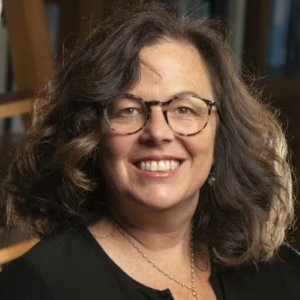
From the moment they met in 1940 in the Ravensbrück concentration camp, Milena Jesenska and Margarete Buber-Neumann were inseparable, loving each other at the risk of their lives. But in the post-war survivors’ accounts, lesbians were stigmatized, and survivors kept silent. Written by Gwen Strauss, New York Times bestselling author of The Nine, Milena and Margarete explores those silences and celebrates the two strong women who never gave up and continue to inspire. Read on for a featured excerpt.
Part One
1940
Passionate Friends
The note was written on a stolen scrap of paper and folded carefully into a tiny square. It was small enough to be slipped surreptitiously into Grete’s palm by a friend as they passed each other on the dusty camp street. Grete felt its delicate edges in her hand for a moment, then slid it quietly into an inner pocket that she had made for hiding just such things. She had to wait until the right moment, when it would be safe to examine the note. When there were no hostile eyes watching her. There were those in the camp who were waiting for a chance to catch Grete and get her thrown out of her job and sent to the punishment block.
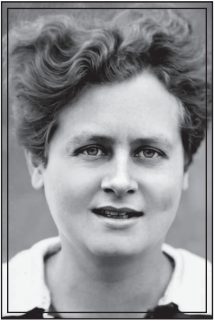
She was struck first by the handwriting, bold and assured. And the words were simple, yet almost like an imperial summons: “Milena from Prague requests a meeting.” She didn’t even use her family name, just her city; where she came from was what mattered.
Grete arrived at Ravensbrück concentration camp, fifty miles north of Berlin, in August 1940, when she was thirty-nine. From a middle-class family in Potsdam, Germany, she had spent the previous two years imprisoned in the brutal Soviet Karaganda Gulag, on the steppes of Kazakhstan. Milena arrived in Ravensbrück two months later, in October 1940, after fifteen months in Gestapo prisons.
Grete would remember her first encounter with Milena as the turning point of her life. They met during the brief exercise period allowed to prisoners, when they could walk in a narrow oblong circular path between the backs of the housing blocks and the high gray wall topped with electrified wires. “The Wailing Wall,” Milena would sardonically name it.
At age forty-four, Milena’s pallid, ashen face was marked by the months she had spent in various prisons. She had deep circles around her eyes, but Grete remarked that they shone with intelligence. Milena had gorgeous shapely lips and a dimple in her chin. Her delicate, weary face was crowned with a mass of reddish-blond curls. She was tall with wide shoulders and a statuesque frame. Though she had a hitch in her gait, she still moved gracefully, gliding through crowds where she easily stood out.
Grete was more solidly built and muscular. Next to Milena, Grete saw herself as plain. The years in the Gulag had roughened and darkened her skin. But she had full eyebrows that accented her half-moon eyes the color of the bluest sky. With her blond hair and blue eyes, Grete had the Germanic beauty that her enemies, the Nazis, so adored. What Milena saw immediately in Grete was her honest open face.
“You must be Margarete Buber-Neumann,” Milena said, smiling.
“Please call me Grete.”
Milena reached out her hand and playfully warned, “Please not a firm German handshake, my fingers are too frail to withstand that.”
They were blocking the path for the other prisoners trudging zombielike in a circle along the wall. But Milena didn’t seem to care. Even in a concentration camp, she acted as if they were meeting to chat on a busy city boulevard. She spoke excellent German with a Czech accent. She was carried away with the pleasure of the moment, and this infuriated Grete. Didn’t she know where she was? She wanted Milena, the newcomer, to do as everyone else, to follow the unspoken rules. This was not how you behaved in a camp, especially when you were a newcomer. But as much as the others muttered angrily and jostled them, Milena ignored them; she stood her ground and continued talking. She had heard some of Grete’s story, and wanted to know if it was true: Had Stalin really traded Grete, along with other anti-fascist prisoners, to Hitler?
Slowly Grete realized that here was a real free woman. Milena’s curiosity remained unbroken by the harshness all around them. What at first bothered Grete was exactly what she would fall in love with: Milena’s innate sense of freedom.
After their parting “Auf Wiedersehen,” Grete returned to her block. Later she would write, “All the rest of the day I was blind and deaf to everything. I was full of the name ‘Milena,’ drunk on the sound of it.”