
A key figure in the early civil rights movement, Lillian Smith devoted her life to ending segregation in America only to be forgotten by history. Drawing on previously unpublished archival research, and with a modern appreciation of Smith’s complex identity, Keri Leigh Merritt’s An Inconvenient Woman is the definitive account of Smith’s life, revealing how she defied all expectations and dedicated her life to racial equality. Read on for a featured excerpt.
WHEN LILLIAN WAS only five or six years old, her world changed in an instant when she was forced to confront everything she had ever been taught. One day, while in town with her mother, Lil overheard older women talking in hushed tones about a new Black family who had just moved into “the colored section” of town. Under their breaths the women hemmed and hawed, then hissed and moaned, then accused and condemned. Never one to shy away from knowledge of any sort, Lillian made it her mission to figure out what the scandal entailed. Apparently, the new residents had a white child with them, a little girl around her own age. “The white club women,” the town’s wealthy elite, “busied themselves in an attempt to do something about this child, and the Negro family was interviewed somewhat persistently for several days, until they grew frightened, and, finally, evasive and silent,” Lillian remembered.
Shortly thereafter, Jasper’s upper-class whites removed the little girl, Julie, from her home. They decided to temporarily place her with Lillian’s family, as the Smiths had a huge, beautiful house filled with children and plenty of room for one more. Despite the illegality of ripping young Julie from her home, elite whites doing whatever they wanted with complete impunity was relatively commonplace in the Jim Crow South, especially in smaller rural towns where just a few wealthy families ruled the population. For three weeks, “Julie roomed with me, shared my bed, sat next to me at our table, wore my clothes, played with my dolls, and followed me around from morning to night, happily dazed by so many comforts and conveniences and pleasures,” Lillian wrote. “She was an affectionate little thing, and I was pleased by her adoration, and quickly a warm personal relationship grew up between us.” Then, suddenly, Lil’s world was shattered when word came from a local orphanage. “There were meetings and whispered conversations with my parents,” she remembered, and then “Julie was quickly whisked away. There were no explanations.”
Lillian began interrogating her mother, Anne, asking how they could give away her adored friend. Anne explained that despite appearing to be white, Julie was, in fact, “a colored girl” and therefore must live “in a colored town.” Lil pointed out that Julie was the same child she was yesterday, that only white people’s perception of her had changed. Anne told Lil she was too young to appreciate what was happening and walked away, leaving her child alone, bereft, and confused. “Yes, I was too young to understand,” Lillian wrote, “But I was not too young to feel the pain of separation from a little friend whom I never saw again, nor too young to make an identification with her shame and bewilderment, nor too young to begin to doubt my parents in the sincerity of their religion.” Realizing the disconnect between the Christianity her parents had always professed and the seemingly unethical way they acted, Lil made the decision to stop accepting everything her elders taught her. “The doubt remained, and the hurt. When people talked of love and Christianity, I knew they did not mean it,” Lil lamented. “That is a hard thing for a child to learn.”
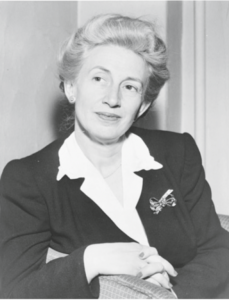
Referring to that awakening as a “faithless day,” as Lillian grew and gained more life experience, she “began to see myself and others like me as crippled people. I began to see that in trying to shut the Negro race away from us, we have shut ourselves away from the good, the creative, the human in life.” She had experienced an extraordinary chance to gain perspective on her own privilege and unequal status over others—a rarity for adults, even rarer for children. This perception provided a theoretical framework for her future writing, but more importantly, it functioned as a moral compass throughout the rest of her life. For every Black child racism harmed, Lillian claimed, a white child was hurt, too. Although the degree of injury was different,segregation clearly wounded everyone involved. The “humiliation of the Negro,” she later wrote, was “matched by the dull complacency of the white; Negro fear by white arrogance; hate by the cruel cheapening of human worth; ignorance by willful hypocrisy and blindness. Every illiterate Negro shut off from schooling is matched by a white who deliberately shuts himself away from knowledge and honest thinking.”
This childhood event, where race was proven to be fluid, biologically undefinable, and manipulated by those atop the power hierarchy, changed Lillian permanently, shattering her worldview and disrupting her childish innocence. In many ways, Julie’s three-week stay with the Smiths could be considered the defining moment of young Lil’s life. It made her question everything she had been taught. It allowed her to see that not every human being was good, ethical, or moral. Most importantly, though, it illuminated the base absurdity of the concept of “race,” destroying the fragile façade of white supremacy. She felt real love—real connection—with a Black friend. “This deep inner conflict, this wearing fear of bringing disaster to the innocent is the price we pay for the privilege of being human in the Deep South. Some of us have made the choice and are willing to pay what is required of us.” Others, though, would not be so easily persuaded. Lillian would commit the rest of her life trying to convert the unrepentant.
An Inconvenient Woman. Copyright © 2026 by Keri Leigh Merritt. All rights reserved.