
Author Jack Kelly of Tom Paine’s War shares with The History Reader the crucial role Thomas Paine (author of Common Sense) played in encouraging Americans to overthrow King George in 1776.
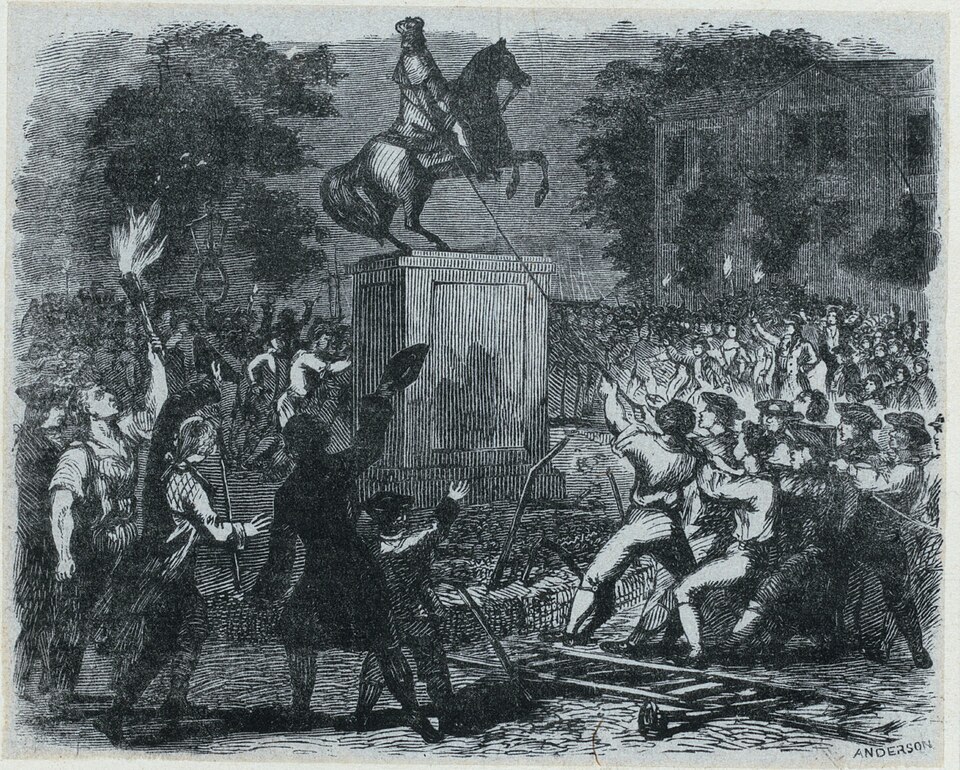
“Look on my Works, ye Mighty, and despair!” Such was the hollow, deeply ironic command etched into broken ruins in the familiar 1818 poem, Ozymandias. The author, Percy Bysshe Shelley, opposed monarchy and celebrated the movement to rid the world of those who proclaimed themselves “king of kings.”
In 1776, absolute monarchs reigned in Europe, from Spain and France to Austria-Hungary and Russia. Britain was ruled by George III of the House of Hanover, who was somewhat constrained by the authority he shared with Parliament. China, Japan, much of Africa, and the lands of the Ottoman Empire were also under emperors, sultans, and other versions of one-man rule.
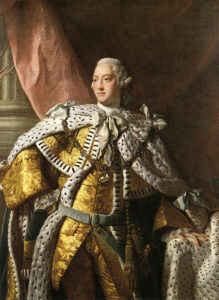
The American Revolution did not start as an effort to dethrone King George III in the New World. Even after violence erupted at Lexington and Concord in April 1775, many Americans continued to revere his majesty. They attributed their dispute with Britain to the ministers who were giving the king bad advice.
In July 1775, the Continental Congress sent the king the so-called Olive Branch Petition. They expressed their “tender regard,” for their sovereign and assured the king they were faithful subjects. They hoped to reconcile with the mother country and to reestablish their “former harmony.”
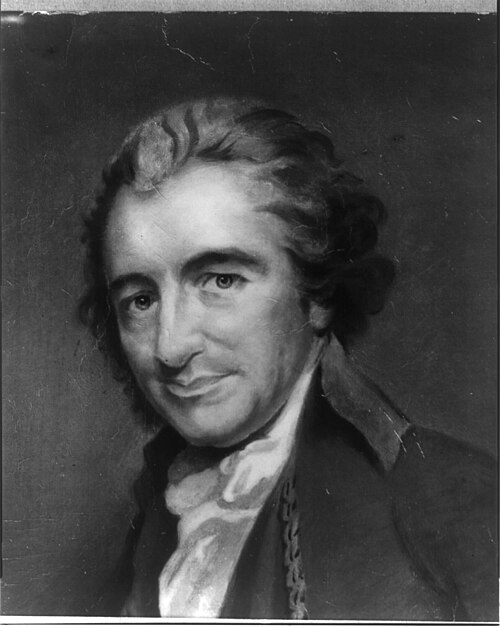
Then came Thomas Paine. A recent immigrant from England, he had found a job in Philadelphia as a magazine editor. During the autumn of 1775, he wrote an essay that turned the conciliation of the king on its head. Paine knew firsthand about the corruption and favoritism that infested England, the poverty in its cities, the injustice of its laws. He saw no advantage in clinging to an aristocratic system held over from feudal times.
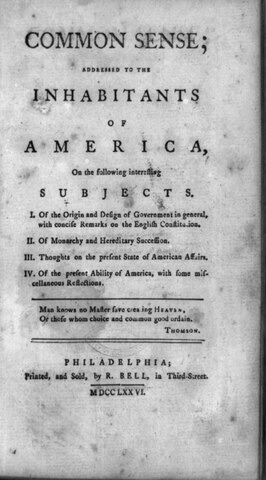
Paine called his essay Common Sense, but its ideas were not common in the thirteen colonies. The majority of the population rejected a complete break with Britain. They had lived under kings for generations. To be a loyal subject was a virtue.
Common Sense began with some convincing reasoning. Did it make sense that an island would forever rule an entire continent? Wasn’t the notion of royalty a “degradation and lessening of ourselves?” Wasn’t hereditary aristocracy an absurdity?
Believing all humans equal from birth, Paine rejected the division of people into kings and subjects. How, he wondered, had “a race of men come into the world so exalted above the rest?”
The king had no divine right to rule over others. The first persons to declare themselves royals, he insisted, were the leaders of bands of “armed banditti” who used violence to enforce their will. Kingship was a fraud.
Then Paine went further, suggesting that the rejection of monarchy in America would “begin the world over again.” A new system in which citizens did not have to submit to monarchs could spread around the world. He reassured patriots that the rule of law would replace the whim of a potentate.
And if those arguments were not enough, he emphasized that, with the war begun, there was no going back. How could Americans again see themselves as servile subjects of Britain? “The blood of the slain,” he wrote, “the weeping voice of nature cries, ‘Tis time to part.’”
Common Sense was wildly popular—the equivalent of a viral social media post. It sold tens of thousands of copies. It was reprinted, talked about, and disseminated through every colony. It changed minds overnight. The jaws of patriots dropped open at the audacity of the ideas. One reader from Connecticut wrote to Paine that, “you have declared the sentiments of millions . . . we were blind, but on reading these enlightening words the scales have fallen from our eyes.”
Thomas Paine had turned a rebellion about taxes and representation into a true revolution. He had made it a cause for which patriots might risk their lives. He looked forward to the “birthday of a new world,” the advent of a new era of freedom on earth.
Just as Paine published his pamphlet in January 1776, word reached the colonies of a speech by King George. He was tossing the Olive Branch Petition back in patriots’ faces. “My People in America,” he said, “now openly avow their Revolt, Hostility, and Rebellion.”
His answer was unrestrained armed force directed at those in the colonies who would not submit to his authority. Thousands of troops would cross the Atlantic to put down the rebellion. War would decide the matter.
But the great wave of enthusiasm for independence touched off by Common Sense was already sweeping the colonies. It would culminate in the July 4, 1776, declaration that the colonies “are Absolved from all Allegiance to the British Crown.”
After a long war and much agony and bloodshed, the spirit of the patriots would prevail over the might of Britain. No king would again rule America. “All kings,” Mark Twain would later write, “is mostly rapscallions.”
Originally posted on Jack Kelly’s Talking to America substack.
