Whack Job by Rachel McCarthy James is a brilliant and bloody examination of the axe’s foundational role in human history, from prehistoric violence, to war and executions, to newspaper headlines and popular culture. Read on for an introductory excerpt of this fascinating, cultural history read.
wcag heading
INTRODUCTION
Nothing Could Be Simpler
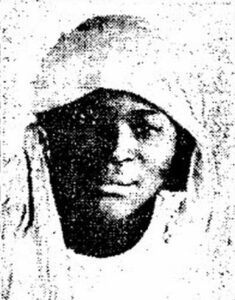
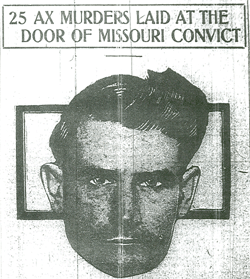
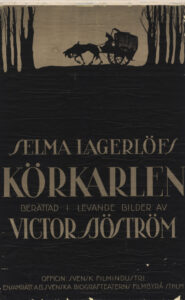
Early on in the process of writing my first book about axe murder, I took a job working in an after-school program. I was twenty-six and I’d recently figured out a new answer to the hundred-year-old mystery of the murder of eight people in Villisca, Iowa. I needed a day job, and the children at the nearby elementary school I had once attended myself were a bright counterpoint to the grim work of researching true crime. Mornings spent mired in awful murders were balanced by cheerful afternoons in sunny playgrounds and colorful classrooms, mediating disputes over nothing more serious than iPad time. At Pinckney Elementary, my job working in after-school care with the Boys & Girls Club was both more and less important than my work unearthing major connections between horrific tragedies. These kindergarteners had real struggles too, but I wasn’t a teacher or their parents. Anything major was above my pay grade. I had to make sure that the kids didn’t die, but only in the two or three hours they were in my care. One day a little boy said something that struck me. The setting was the gym, a routine safety assembly. Fire was banal as a threat, routine, done to death. But in 2013, the possibility of a mass shooter was still novel and exciting enough to make the kids antsy. Especially since we were talking about school shootings like they were some forbidden R-rated movie. Barricading doors, running away, hiding, all of those things were covered—but we avoided mentioning the actual threat, the weapon, the gun. The boy, a fifth grader, raised his hand, blurting out, “WHAT IF IT WAS AN AXE MURDERER?” He accompanied the question with a mimed motion and sound effect that was somewhere between light saber and baseball bat. We just moved on without reacting—you can’t rise to the bait that way when you’re trying to get children to take something seriously. But the incident stuck with me. How did this child, born into the age of touch screens, have a reference point for “axe murderer”? It makes sense that he wouldn’t say “what about a SCHOOL SHOOTER?” since that was the source of the very tension that the joke intended to relieve. Instead, he reached into his imagination and came up with a tool. Axes are a big deal in Minecraft, so I have no doubt that he understood that their primary purpose as a tool is to cut down trees. Axe murder, though, seemed a joke too dark for such a tender age. How was the violence of an axe murderer remote enough to be funny and yet familiar enough for a ten-year-old to invoke? The boy’s antics stuck with me throughout the process of writing and promoting my book The Man from the Train. Like this book, it is a work of nonfiction. The man in question would ride the rails to a community where he had no ties, pick up an axe left outside in a woodpile, break into a house, and kill everyone inside; he especially targeted households with children. The book makes the argument that this pattern repeated dozens of times nationwide over about fifteen years and can be traced back to a man who evaded capture after murdering the family he lived with and worked for on a small farm in Massachusetts. From the beginning of my research process, the idea of the axe murderer as opposed to a murderer who used an axe was central to my understanding of these tragedies. Newspapers embraced the grabby compound phrase slowly: in 1890, the term was almost never used, but by 1920 it was used frequently. Our fiend in The Man from the Train killed perhaps as many as a hundred people beginning in 1898. He began relatively slowly, slaying one or two families a year, choosing rural communities and leaving geographic distance between his attacks. We believe that he was following work opportunities—especially the chance to use the axe to fell trees as a lumberjack. In 1909, he ramped up the bloodshed and the events became more frequent and more tightly spaced. Though the idea of serial killers wouldn’t be formalized for decades to come, awareness of them was dawning among the crime-obsessed public. After the man killed two Colorado Springs families on a September night in 1911, headlines about the “axe-murder” began to take root in newspaper pages, especially in the Midwest. Newspaper photograph of Clementine Barnabet. Circa 1911-1912, The Atlanta Constitution newspaper. Public domain. Courtesy of Wikipedia.The coverage of that event died out, but the phrase took hold with the trial of Clementine Barnabet. She was a young black woman in Lafayette, Louisiana, a troubled eighteen-year-old obsessed with cults and true crime who confessed to a series of murders in Louisiana and Texas—horrible crimes she (in my firm opinion) did not commit. Her vivid court statement involving voodoo rituals grabbed headlines across the country; white journalists found it easy to exploit their readers’ racism by placing exaggerated and obvious rumors into print. By the time the man from the train made his infamous trip to Villisca in June 1912, the phrase “axe murder” was a well-established part of the crime-writing lexicon, never to exit it again. It stuck to the Villisca event so firmly that when I first started research in 2012, the Wikipedia page for it was the first Google result for the phrase “axe murder.” I once believed that the emergence of this wording in newspaper headlines also mirrored a surge in the use of axes themselves as a weapon, but now, having tracked the axe over so long a period throughout human history, I don’t think that’s true. Axes are at their core utterly common, and so they have been as ubiquitous as weapons as they have been as tools. They are everywhere in our story of violence, so much a part of the texture of our conflicts that they become banal, unworthy of note. What made the phrase “axe murder” so charged in the 1910s was a clash of cutting-edge technology with ancient traditions in toolmaking over the previous sixty years. Industrialization would eventually make the axe fall out of daily use, but for a moment the new machinery made the humble axe omnipresent. Battleaxes were thoroughly outdated by the Civil War, but in military and domestic settings there were more axes than perhaps at any other point before in history. Steel tool use proliferated after 1856, when a man named Henry Bessemer devised a new method of purifying iron quickly and inexpensively by oxidizing iron with pressurized air to remove carbon and other impurities. This one-step method was discovered in the process of producing cannonballs that could be fired in the manner of a rifle. Bessemer was driven to problem-solve after the British postal service stole his fiancée Ann Allen’s idea to modify the dates on embossed postal stamps, a grudge he held even after his steel foundry made him wealthy. Steel had previously been quite precious and rare, but unlike lab-grown diamonds, its new availability and cheapness did not temper demand. Skyscrapers and trains and paper clips alike flowed out of the foundries, along with a flood of hand tools: hammers, shovels, hoes, and others were suddenly much more common and inexpensive. In the 1866 Fyodor Dostoyevsky masterpiece Crime and Punishment, the antihero Raskolnikov murders an elderly pawnbroker and her sister with an axe, grabbed from the kitchen in his apartment building. In the depths of his absurd and monstrous plans, in the chaos of Saint Petersburg and his own head, he settles upon the convenience of the axe: “nothing could have been simpler.”As electricity and plumbing and cars and telephones became increasingly accessible, the axe seemed all the duller. Guns supplanted the axe as the convenient weapon of choice. Chainsaws were used for a larger and larger share of forestry applications, though they weren’t yet in use in the home. Axes were becoming an object of slight kitsch. At the 1893 World’s Fair, a small glass version of George Washington’s axe was a popular souvenir. Carrie Nation—a leader in the temperance movement of the early twentieth century who raided and destroyed bars and speakeasies—remained an object of derision long after the repeal of prohibition, her tiny hatchet no equal for the country’s thirst. One brand of tobacco in the form of a plug (a brick of compressed tobacco leaves, to be cut off and chewed or smoked in a pipe) called itself Battleaxe, recalling a now firmly extinct era of violence to flatter male customers who want to think of themselves as rugged—not unlike the logic behind Axe personal care products today. The axe was still around, but becoming antiquated. Newspaper excerpt containing a photo of Henry Moore, a serial killer suspected in Villisca axe murders. Public Domain. Courtesy of Wikipedia.By 1922, the phrase “axe murder” appeared in U.S. newspapers hundreds of times each year, always used to describe actual crimes. But, like all grabby phrases, it became tinged with the grime of exploitative newspaper coverage through overuse. As the chainsaw took more and more of the axe’s main occupation, the axe became an anachronism. The contrast between the axe (boring) and murder (exciting) gave the phrase a darkly comic tinge. By the 1950s, “axe murder” was still a staple of newspaper headlines, yet the phrase and indeed violence with axes itself was becoming a stock joke. In Shirley Jackson’s lighthearted book of domestic essays Life Among the Savages, she writes of a sleepy domestic scene perked up by violence: “I finally found an account of an axe murder on page seventeen, and held my coffee cup up to my face to see if the steam might revive me.” In 1955, Charles Schultz killed off unpopular character Charlotte Braun in an illustration that parodied the gentle humor of Peanuts by putting an axe in Charlotte’s head. In the 1964 hagsploitation movie Strait-Jacket, Joan Crawford campily raised the axe for B-movie thrills to theatrical success. Axe murder had primal connotations, deeply interpersonal and separate from the state violence of execution rituals and battlefields where axes have created the most bloodshed. These associations came in handy in 1976, when North Korea and the United States nearly got into a war about a tree. In the North Korean axe murder incident, Captain Arthur Bonifas and Lieutenant Mark Barrett of the U.S. Army tried to trim a poplar tree that had created a surveillance blind spot. The tree grew on the Bridge of No Return, a tense spot near the Demilitarized Zone where North Korea, South Korea, and the United States observed an uneasy truce, often taunting one another by banging on windows with axe handles. The captain and lieutenant were killed by thirty North Korean soldiers, armed not just with their own axes but with “crowbars, pipes, [and] clubs” taken from South Korean laborers. The United States responded with restraint by simply cutting down the tree (with a much more efficient chainsaw), leading to some crucial concessions from the North Korean president and transforming the tripartite relationship. Though the event was not especially well remembered, it illustrates some of the crucial associations of axes and violence in the United States. The term “axe murder” characterized the incident as a close-quarters grudge, not a military exercise with guns and helicopters but something ugly and outside of bounds. And, since this war was almost begun by trimming a tree and ended with chopping down that tree, there’s a sense of something just barely funny about it. Swedish poster for The Phantom Carriage. Public domain. Wikipedia.Axe murder—or really, axe murderers—became a permanent punchline after The Shining in 1980. The moment where Jack Torrance hacks through a locked door with a fire axe is darkly funny all on its own, with its invocation of Johnny Carson’s signature catchphrase; the shot itself harkens back to a movie called The Phantom Carriage, made around the first flush of “axe murder” in 1920. When a Mike Myers movie goofily satirizing the eighties erotic thriller needed a punchier title, they went to the Shining parody set piece at the center and called it So I Married an Axe Murderer. Though the comedy wasn’t an initial hit, it’s become an enduring cult classic, permanently sealing the idea of axe murder as comic. Infinite references, parodies, homages of the axe breaking through the wood in The Simpsons or MythBusters or Super Bowl ads for Mountain Dew Zero Sugar have built a long legacy for the fire axe wielded by Jack Nicholson. But the phrase mostly disappeared from newspapers describing actual crimes. It is now too unserious.The axe in silhouette still has genuine menace when the tone is dark, and power—an axe, usually with a hyperbolically huge blade, is often a formidable weapon in violence-oriented video games. But an axe murder is also appropriate for a throwaway line in a lighthearted family comedy like Bob’s Burgers, the second of three in a list: “roller coasters, or axe murderers, or Dad’s morning breath.” An escalation from roller coasters on the way to the real punchline. The idea of an axe murderer is not so much a shock as a joke so easy a ten-year-old could make it.
***
Axes are far from humanity’s only deadly, omnipresent instrument. Hammers and swords and knives are objects of fetishistic fear, each in many ways more iconic than the axe. Knives and hammers are an even more essential tool for the little jobs of daily life, closer at hand than an axe in most modern households. And while axe throwing has had a recent upswing in popularity, fencing is an Olympic sport. Axes can be expensive toys and objects of honor and prestige, but a hatchet will never have the pedigree, the classiness, the pretensions of the épée.
Yet, it is that earthbound flintiness that makes the axe so iconic. There is no tool older. The axe is the sword, it is the hammer, the planer, the scythe, khopesh, knife. As every task somehow involves your smartphone today, so everything required a hand axe when humanity began. Early people spent their lives refining their craftsmanship to make these biface tools beginning about two and a half or three million years ago, learning the qualities of different kinds of stones and perfecting the flaking and percussive techniques to make these elaborately faceted gems into teardrop shape. And then half a million years ago, the tools got a hell of a lot better. Handles were a miracle of engineering, allowing the one-piece blade to do “cutting, scraping, chopping, and piercing.” This was a transformation in hunting and in interpersonal violence.The axe gained literal power with the handle, its force physically enhanced by the new leverage, and became all the more valuable as a tool, as a weapon, as a symbol of wealth. Specialized axes spread into professions beyond woodcutting, such as coopering (barrel making), shipbuilding, and roofing, and revealed their usefulness for enforcing community disputes. The axe’s power only grew with the introduction of metals. Otzi—the naturally mummified man who lived 5,300 years ago in the Alps of Northern Italy and was discovered in 1991—held an axe. The head of the tool was fitted into the handle and lashed rather than the other way around— typical for stone axes. But this blade was copper, a sign of the man’s high social status, and his weapons were flecked with the blood of others. By the time we start to have recorded history, the axe is already loaded with the language of power. The Dresden Codex—a Mayan book that is one of the oldest in the Americas—had a specific ideographic symbol, ch’ak, defined as the “axe/comb glyph,” which possibly refers both to events of war and decapitation as well as the movement of the planets. This association is reflected in the warrior god of lightning Chahk’s great jade axe—an association between the axe and the great whacks from the sky that persist across many systems of belief from around the world: Pangu’s axe that cleaved the world in Chinese mythology, or Hephaestus hitting Zeus’s head with an axe to birth Athena. State violence invested the axe not just with power but with authority. In war, execution, and other official and sanctioned shows of power and force—the axe was always present in the chaos of battle and the awful order of ritual violence. Battleaxes were thinner than woodcutting axes, but both were present on campaigns, key to battles on land and sea. Axes were a distinctive part of many legendary military forces, even into the twentieth century in some cases— in the Democratic Republic of the Congo, the Songye people made elegant hatchets for ceremonial decapitation rituals that have spokes where the cheek of the blade would usually be, etched with human faces. The posture a person must assume to be beheaded is submissive. To lay your neck on the block means that you have not just been defeated but that you have stopped fighting. This is the theater of death: it is not so much about making the condemned feel their defeat, but about communicating the totality of their defeat to the people watching, who might wish to succeed where the condemned failed. This is the reason the axe was such an important part of the fasces, a symbol from Rome that has resonated with genocidal imperial empires from the United States to Germany, and the namesake of fascism. The axe tells anyone who hopes to resist that they will be not only killed but also ideologically defeated. But even as the axe can be put toward the abuse of power, so it can be put toward resistance. The commonness of the axe and its inseparability from the rank and file of labor processes lend it unexpected power in rebellion and revolution. The artist Kerry James Marshall has returned again and again to the subject of Nat Turner, who led a slave insurrection armed with axes in southern Virginia in 1831; the axe appears in two of these paintings, for woodcutting and for beheading Turner’s enslaver.In the establishment and westward expansion of the United States, the axe became pivotal. Early on, it was heavily taxed as an import, making it a scarce and valuable tool in trade. Demand only grew. This was once a heavily forested country full of unimaginably huge trees, and there were homes and farms and railroads to build. Even nonrural families like the Bordens found themselves with five different axes in their cellar. As the Bessemer method led to the explosion of steel tools in general, there were suddenly many more patterns of axes to fit different needs: roofing, woodcutting, firefighting. The Pulaski, an axe with a hoe on the back of the pole invented in 1911, endures especially as an essential firefighting tool.But by 1965, the axe was no longer the default choice for so many of the tasks it once handled. Chainsaws took its truest purpose, woodcutting. Electric heat reduced the need for firewood cut in the home. Grocery stores made it easier and easier to buy meat that was already butchered. Cars meant there were no more carriages to repair or horses to shoe. Today, you only have five axes in the basement if you really like axes.
Start listening to an audio excerpt of Whack Job!
Photo credit: Carly Hays
RACHEL MCCARTHY JAMES was born and raised in Kansas, the daughter of baseball’s Bill James and artist Susan McCarthy. She graduated from Hollins University in Roanoke, VA, where she studied writing and politics. Her first nonfiction book, The Man from the Train, was written in collaboration with her father and published in 2017. She lives with her husband Jason and pets in Lawrence, KS.