In Running Deep, New York Times bestselling author Tom Clavin reveals the true story of the deadliest submarine in World War II and the courageous captain who survived torture and imprisonment at the hands of the enemy. Read on for a featured excerpt.USS Tang (SS-563), port side view entering Pearl Harbor. Courtesy of Wikimedia. Public Domain.The torpedo was coming right at them. Everything appeared to be in slow motion—except the torpedo spearing through the water at thirty knots. Only five minutes earlier, the USS Tang had been in the middle of a feeding frenzy that would secure its position as the most successful American submarine in the Pacific Ocean. An entire convoy had been presented through the periscope, unaware it was being observed by a submerged predator. The stunned Japanese officers must have thought that a wolf pack was attacking them, the way the explosions kept coming one after the other. Three of the ships were already collapsing and heading for the bottom of the Formosa Strait.Of the twenty-four torpedoes that had been loaded onto the Tang when the patrol began, only two were left. Use them and the submarine could head home. This time it would be all the way home—not Midway, not Pearl Harbor, but San Francisco. The married members of the crew would reconnect with wives, and in a few cases, children. The bachelors would go out on the town. All deserved whatever they could enjoy after five patrols within ten months that had Imperial Navy and merchant captains jumpy. Any periscope sighted or sonar blip could be the Tang—the sub seemed to be everywhere at once. USS Tang Captain Richard Hetherington O’Kane, c. 1946. Courtesy of Wikipedia. Public Domain.Now, at 1:25 a.m. on October 25, 1944, one of the enemy ships that had been hit had not sunk. To Captain Richard O’Kane, it made perfect sense to use the last two torpedoes to finish it off. The commander of the transport had to be assuming the overall attack was over and was hoping to keep his vessel afloat long enough to reach the nearest port. It was limping along four miles northeast of Oksu Island. The Tang surfaced five thousand yards away, rising out of the sea like a reckoning. Its diesel engines seemed to know they needed to be as quiet as possible. Two Japanese escort ships protected the wounded transport, but both were on the seaward side. O’Kane saw an opportunity—an opening on the coast side. After withdrawing a thousand yards to further reduce the risk of detection, the Tang swiftly circled the three Japanese ships. After half an hour at a surface speed of a brisk eighteen knots, the sub turned toward the transport’s port beam and moved in at two-thirds’ speed. At four thousand yards, the captain issued the call for battle stations. A thousand yards closer, the sub slowed to steerageway speed and examined its prey. The enemy transport was indeed lower in the water than when it had first been struck, but that did not mean it was damaged enough to sink. Who knew what desperate repair work was being conducted inside that hull. A strong piece of evidence of the ship’s durability, the thirty-three-year-old captain noted, was that the escorts had not towed the transport to the nearest land to at least save the cargo from sinking. The Tang eased up to six knots, drawing quietly closer yard by yard. Assured that the last two Mark 18–1 torpedoes had been checked and rechecked, O’Kane ordered them ready for launching. The oblivious enemy captain of the Matsumoto Maru could not have made the transport a more inviting target. The sub slipped to within eleven hundred yards, then a thousand, then nine hundred. That was the distance O’Kane had chosen. There was not another moment to waste. Finally, at 2:30 a.m., the captain called out, “Fire!” At that distance, the torpedo would take a minute to hit. O’Kane and others on the bridge could see the phosphorescent wake of the weapon as it knifed straight ahead. “Stand by below!” called Lieutenant Frank Springer, the Tang’s executive officer. They did not have to stand by long. Almost immediately afterward, O’Kane ordered again, “Fire!” The second—and the submarine’s very last—torpedo plunged into the otherwise calm water of the Formosa Strait. But only several yards later, instead of following the straight and true path of its companion, the torpedo turned sharply left. As those on the bridge followed its spontaneous path, they realized that it could come full circle. “All ahead emergency!” O’Kane shouted. “Right full rudder!” This maneuver was an attempt to propel the Tang outside of the wayward weapon’s turning circle. If only the torpedo would change direction again. But the missile continued to porpoise as it heeled in the turn. In less than ten seconds, it had reached its maximum distance abeam, about twenty yards. It was now coming in. The Tang had only seconds to get out of the way. “Left full rudder!” The slender, 311-foot-long submarine’s only remaining chance of avoiding the devastating impact was to swing its stern clear of the warhead. All four Fairbanks Morse diesel engines—capable of a combined 6,400 horsepower—rumbled in protest and emitted black exhaust as they were pushed to their limits. Everything about the scene seemed to get slower and slower . . . except the torpedo. It was certain death approaching, thanks to its payload of 570 pounds of torpex, equal to 850 pounds of TNT. Soon, the Tang could join the five enemy ships—the twenty-third torpedo had indeed finished off the Matsumoto Maru—at the bottom. As he willed the Tang out of harm’s way, Captain O’Kane may have noted the irony that his submarine had been so successful that it could even sink itself.
Start listening to an audio excerpt of Running Deep!
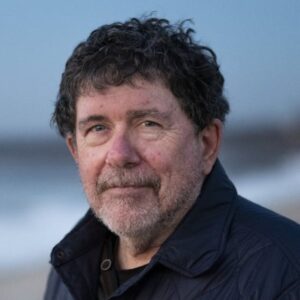
TOM CLAVIN is a #1 New York Times bestselling author and has worked as a newspaper editor, magazine writer, TV and radio commentator, and a reporter for The New York Times. He has received awards from the Society of Professional Journalists, Marine Corps Heritage Foundation, and National Newspaper Association. His books include the bestselling Frontier Lawmen trilogy—Wild Bill, Dodge City, and Tombstone—and Blood and Treasure, The Last Hill, and Throne of Grace with Bob Drury. He lives in Sag Harbor, NY.